Detailed Climate Information for Tunisia: Regional Weather Patterns and Data
Welcome to Tunisia! This North African country offers a diverse climate with a mix of Mediterranean and arid influences.
Tunisia has a Mediterranean climate along the northern coast and a desert climate in the southern regions. The coastal areas enjoy mild, wet winters and hot, dry summers, while the interior regions have hot summers and cooler winters with less rainfall. The desert regions experience extreme temperature variations between day and night.
Best Travel Time Guide for Tunisia: Ideal Seasons and Weather Insights
The best time to visit Tunisia is during the spring and autumn months when the weather is pleasant and mild. However, if you prefer beach activities, the summer months are ideal for enjoying the warm waters of the Mediterranean. For desert adventures, the winter months offer cooler temperatures for exploring the Sahara Desert.
Detailed Climate in the Regions of Tunisia
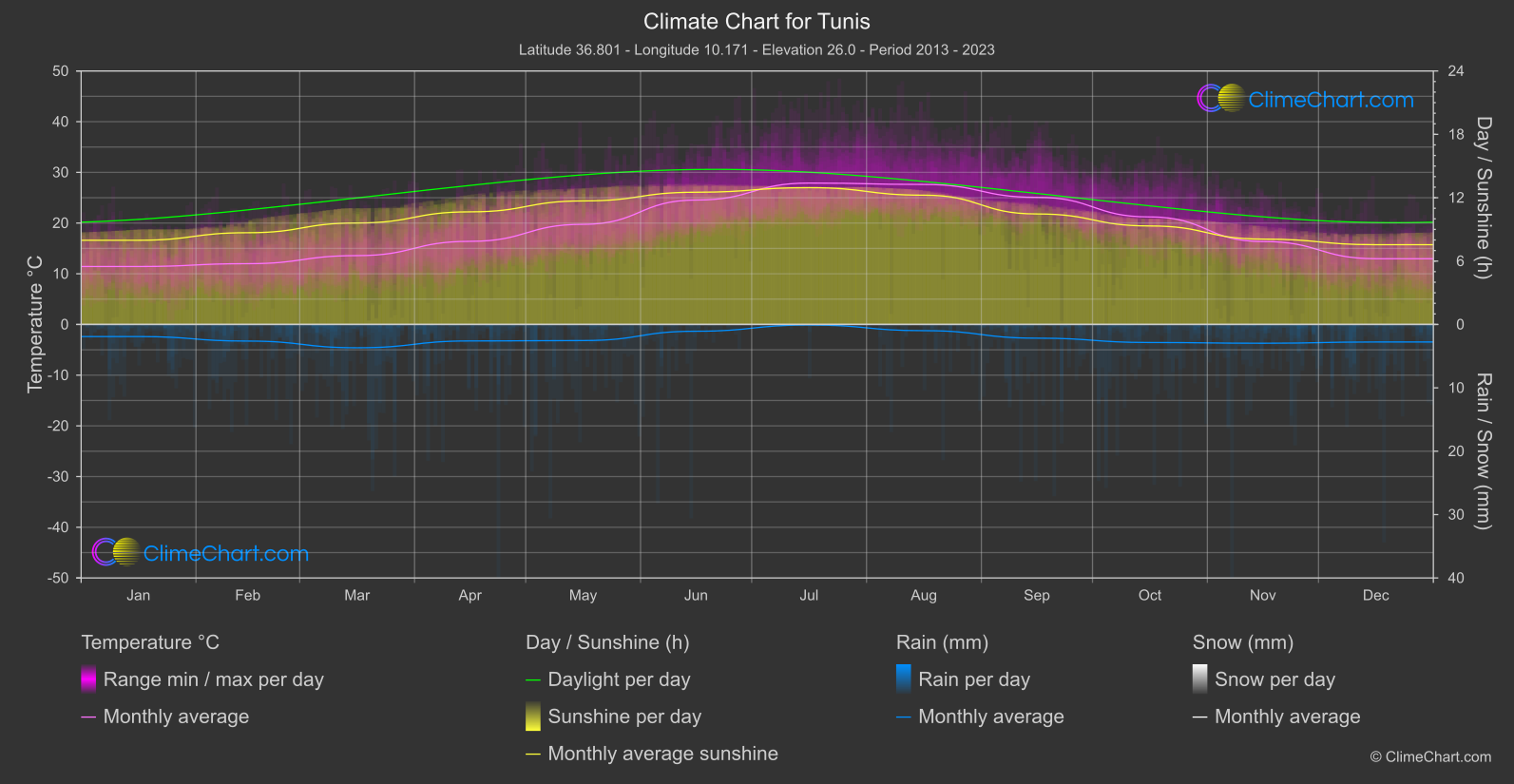
Tunis
Region North
The monthly mean temperature is lowest in January at 11.
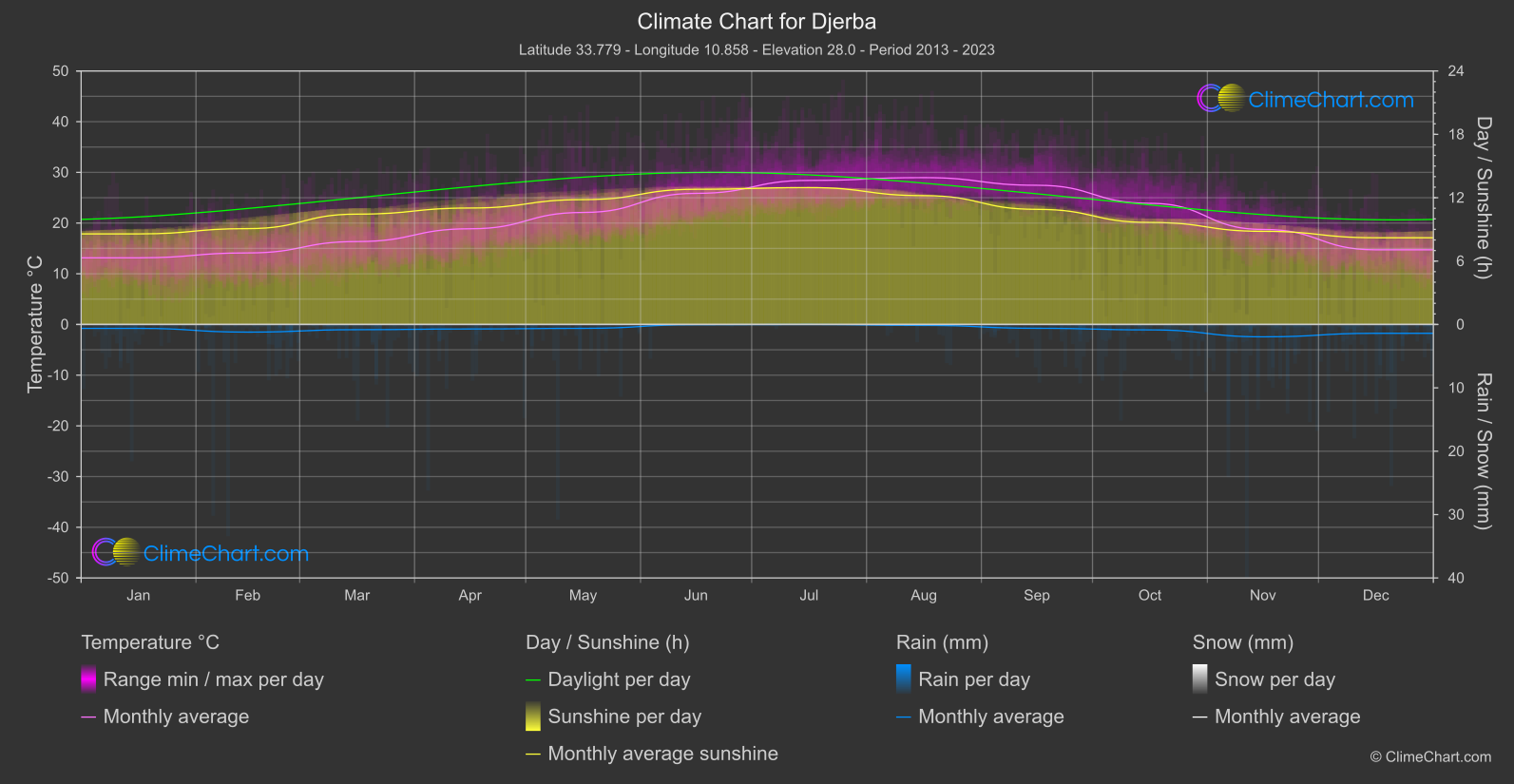
Djerba
Region East
Monthly mean temperatures are coolest at 13.
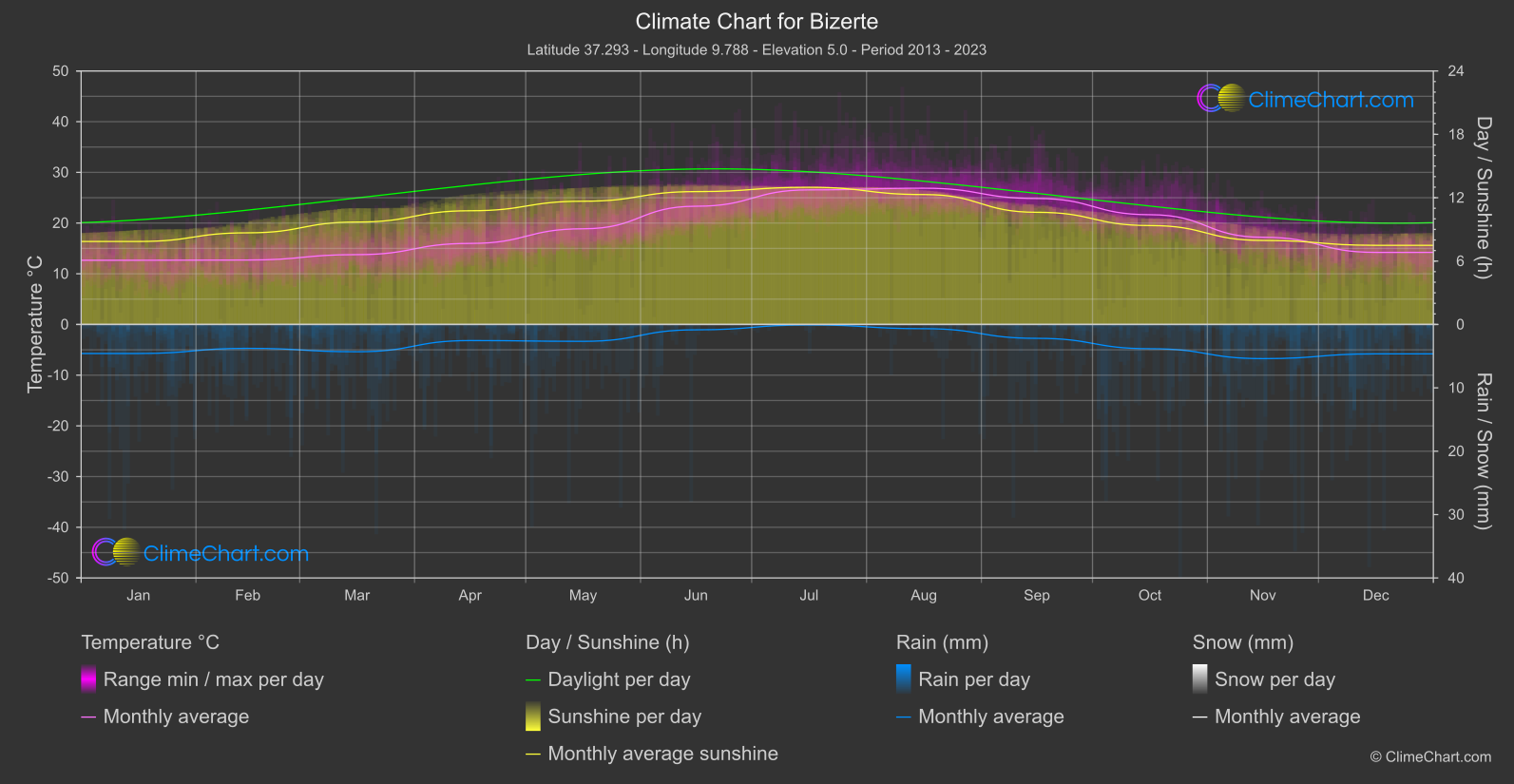
Bizerte
Region North
The coolest monthly means occur in January / February, at 12.
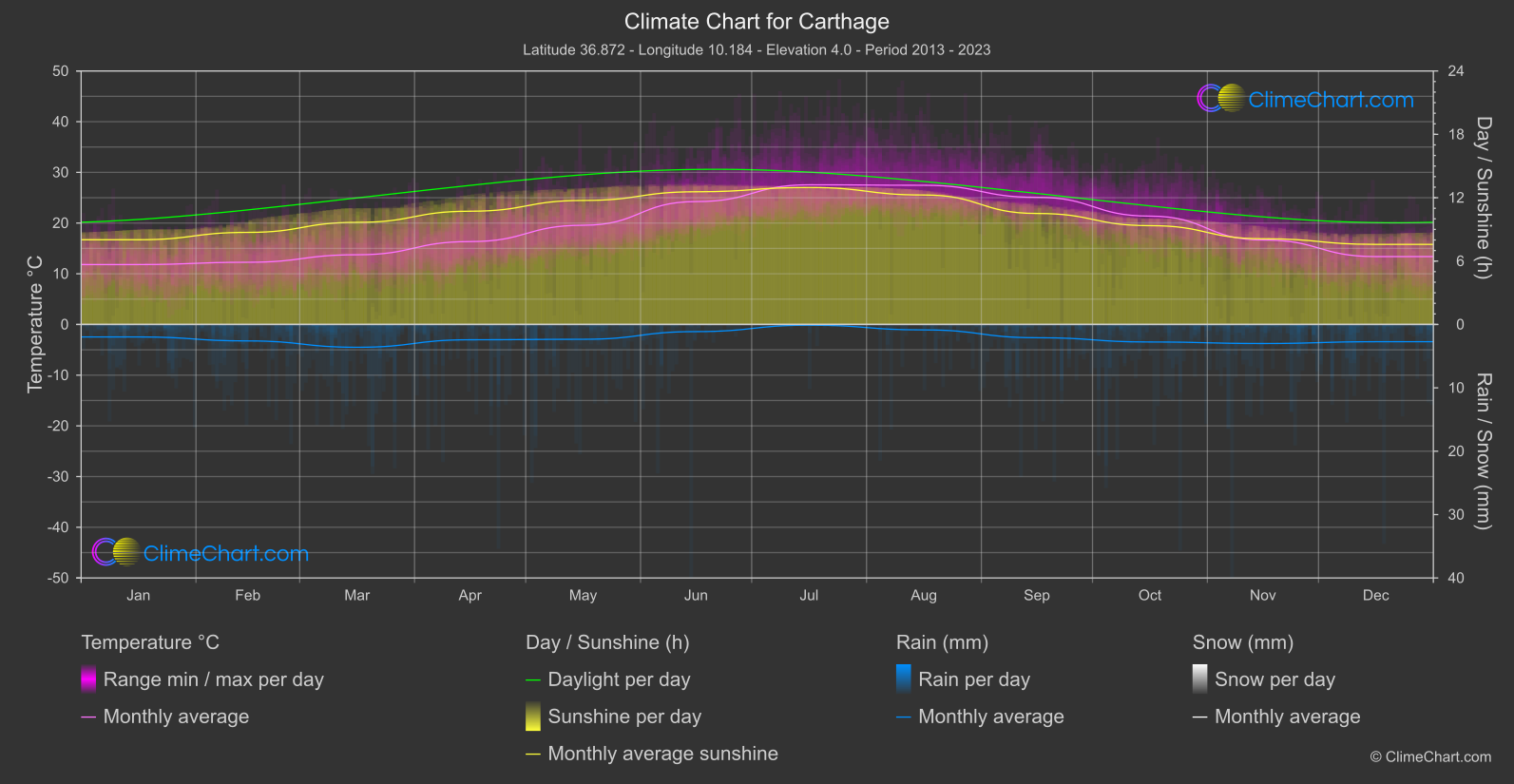
Carthage
Region North
Monthly mean temperatures are highest in July / August, reaching 27.
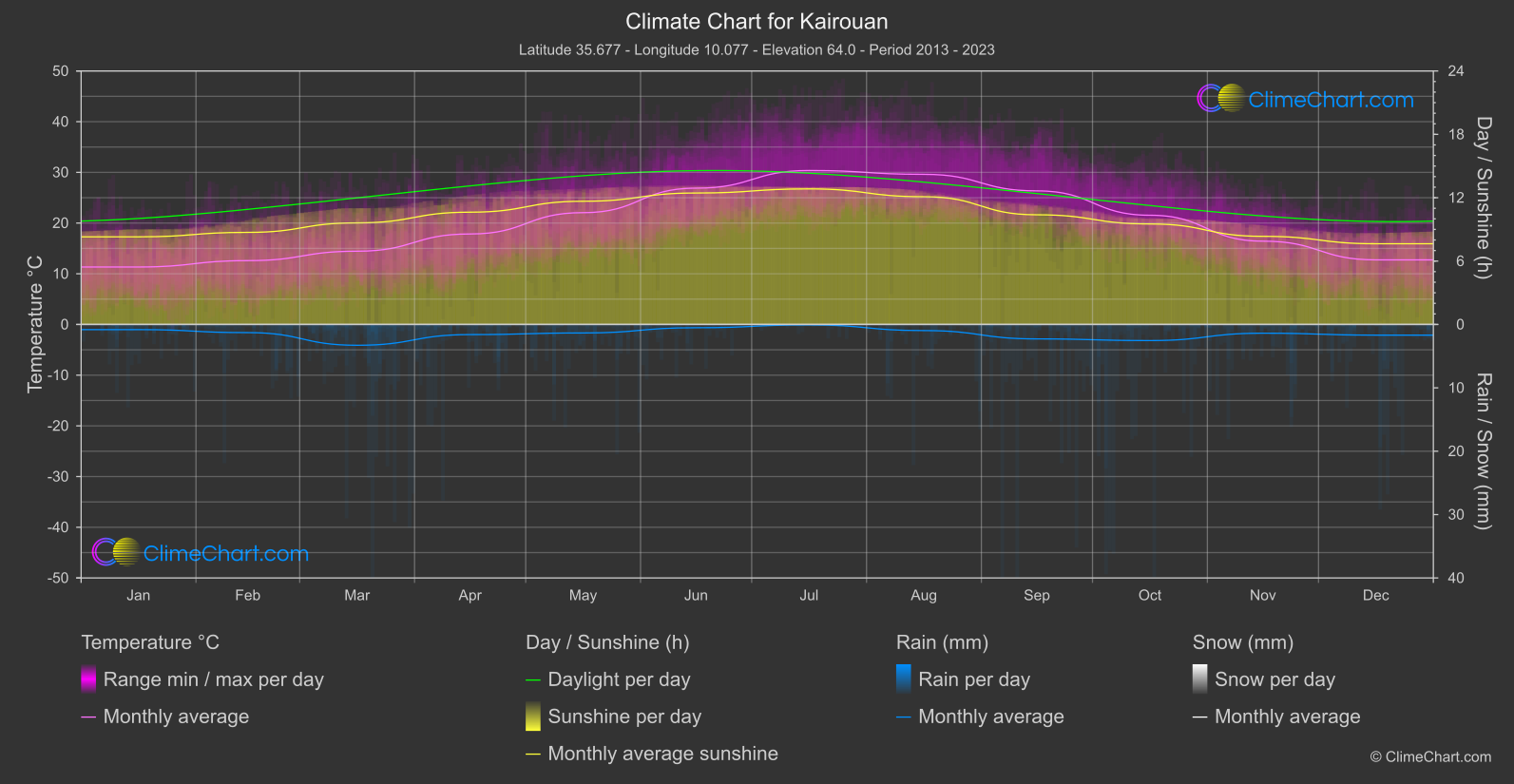
Kairouan
Region North
January has the lowest monthly mean temperature, 11.
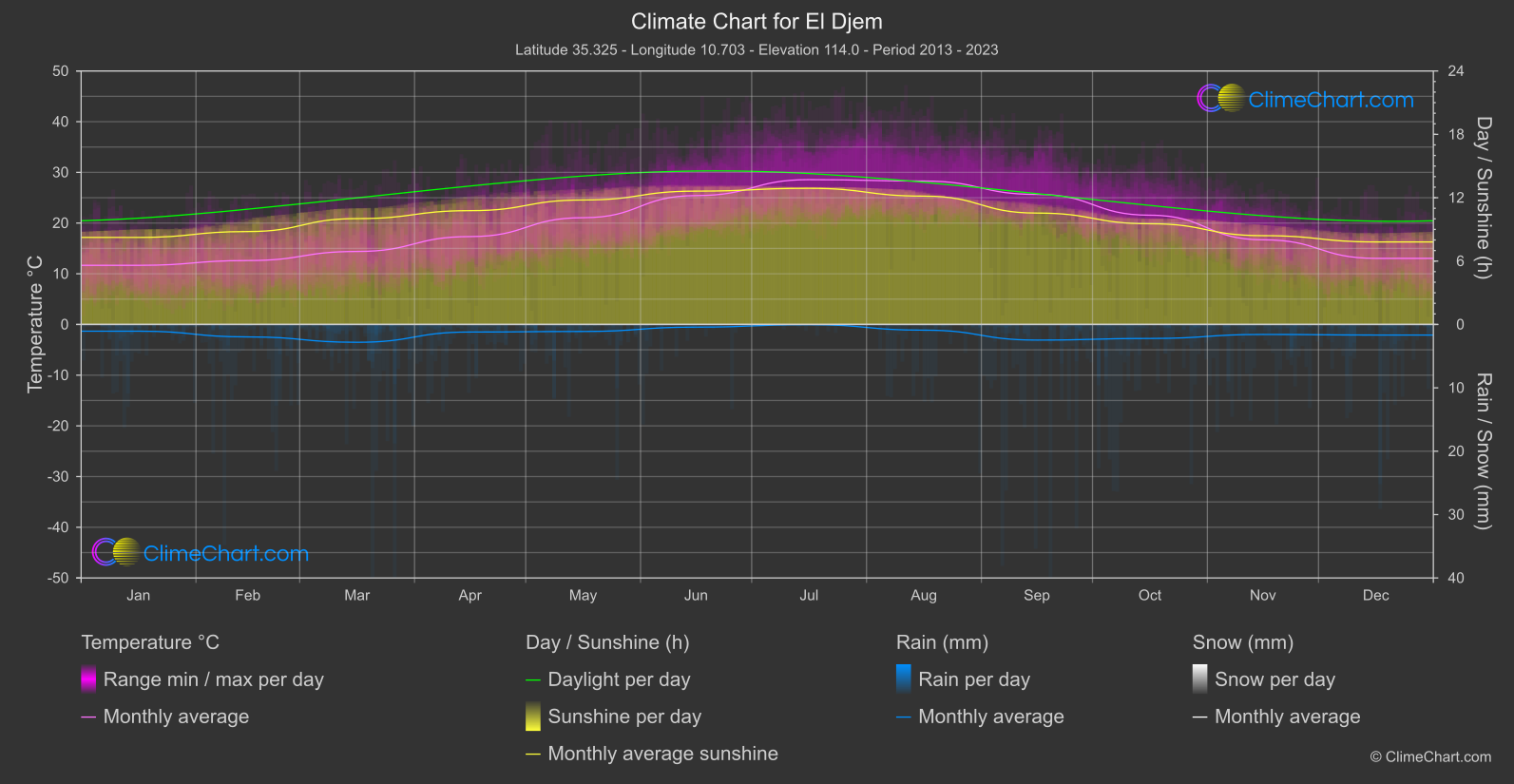
El Djem
Region North-East
The coolest monthly mean temperature occurs in January, at 11.
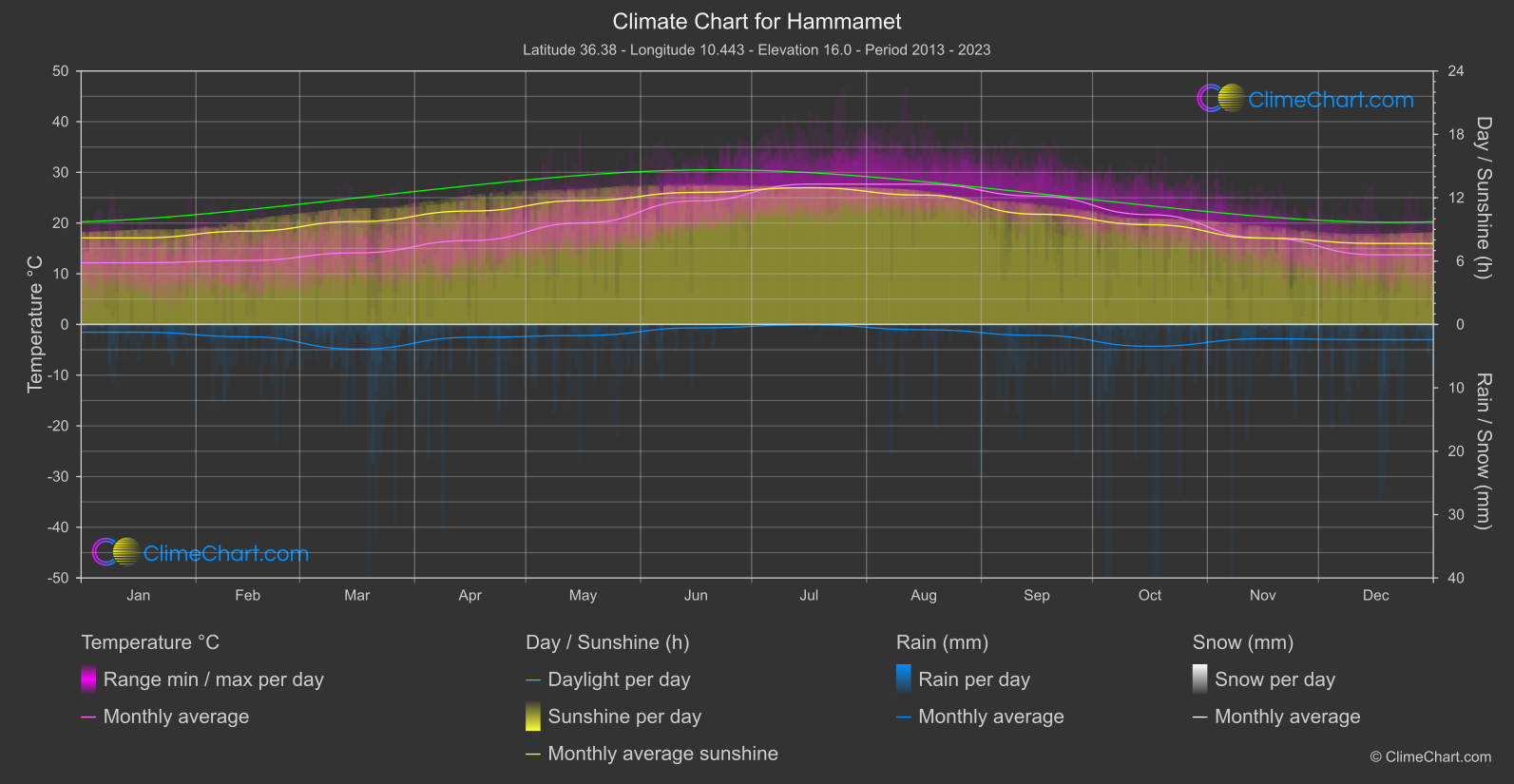
Hammamet
Region North-East
The coolest monthly mean temperature occurs in January, at 12.
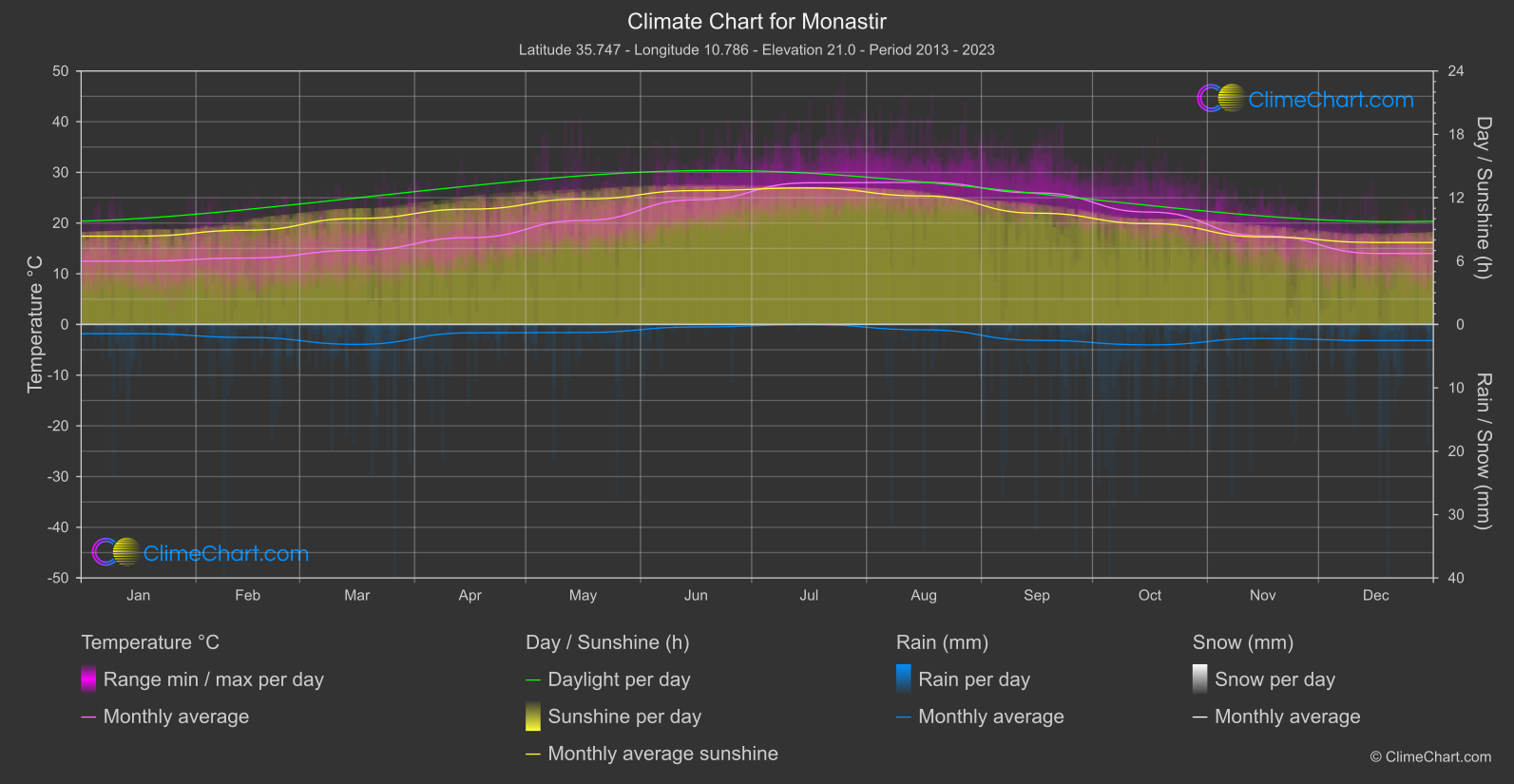
Monastir
Region North-East
The coolest monthly mean occurs in January, at 12.
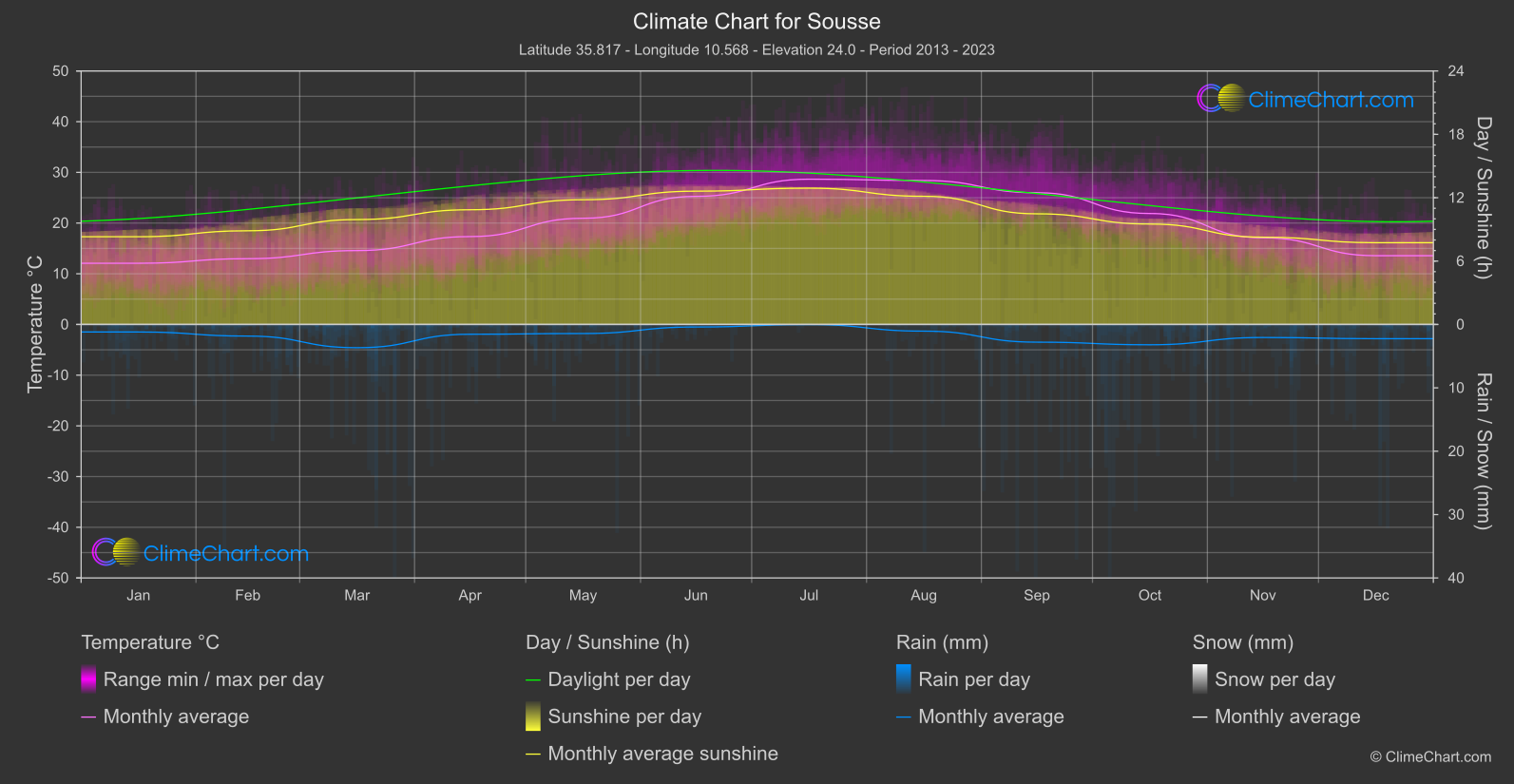
Sousse
Region North-East
Monthly mean temperatures are lowest in January, at 12.
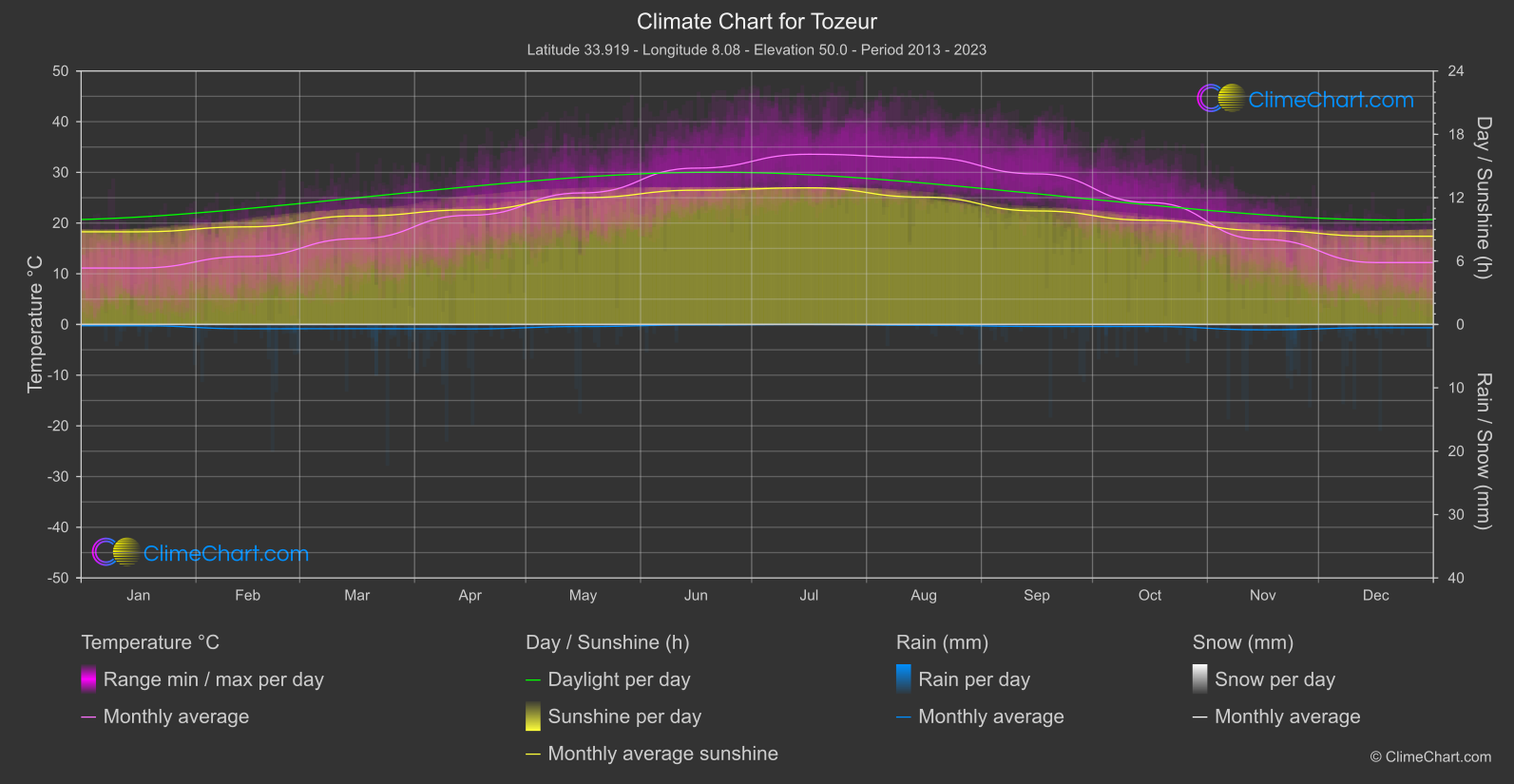
Tozeur
Region West
Monthly mean temperatures are lowest in January at 11.