Detailed Climate Information for South Africa: Regional Weather Patterns and Data
South Africa boasts diverse climatic conditions that cater to various preferences and activities for travelers.
South Africa experiences a variety of climates due to its vast size and topographical diversity. The coastal regions have a Mediterranean climate with warm, dry summers and mild, wet winters. Inland areas have a more temperate climate with hot summers and colder winters. The northeastern region has a subtropical climate, while the western part of the country is characterized by desert conditions.
Best Travel Time Guide for South Africa: Ideal Seasons and Weather Insights
The best time to travel to South Africa depends on the region you plan to visit. For coastal areas, the summer months from November to February offer warm temperatures and sunny days, ideal for beach activities. Inland regions are best visited during the cooler months from May to September when wildlife sightings are more common. The northeastern parts are pleasant to visit year-round due to their subtropical climate, while the western regions are best explored in the milder spring and autumn months.
Detailed Climate in the Regions of South Africa
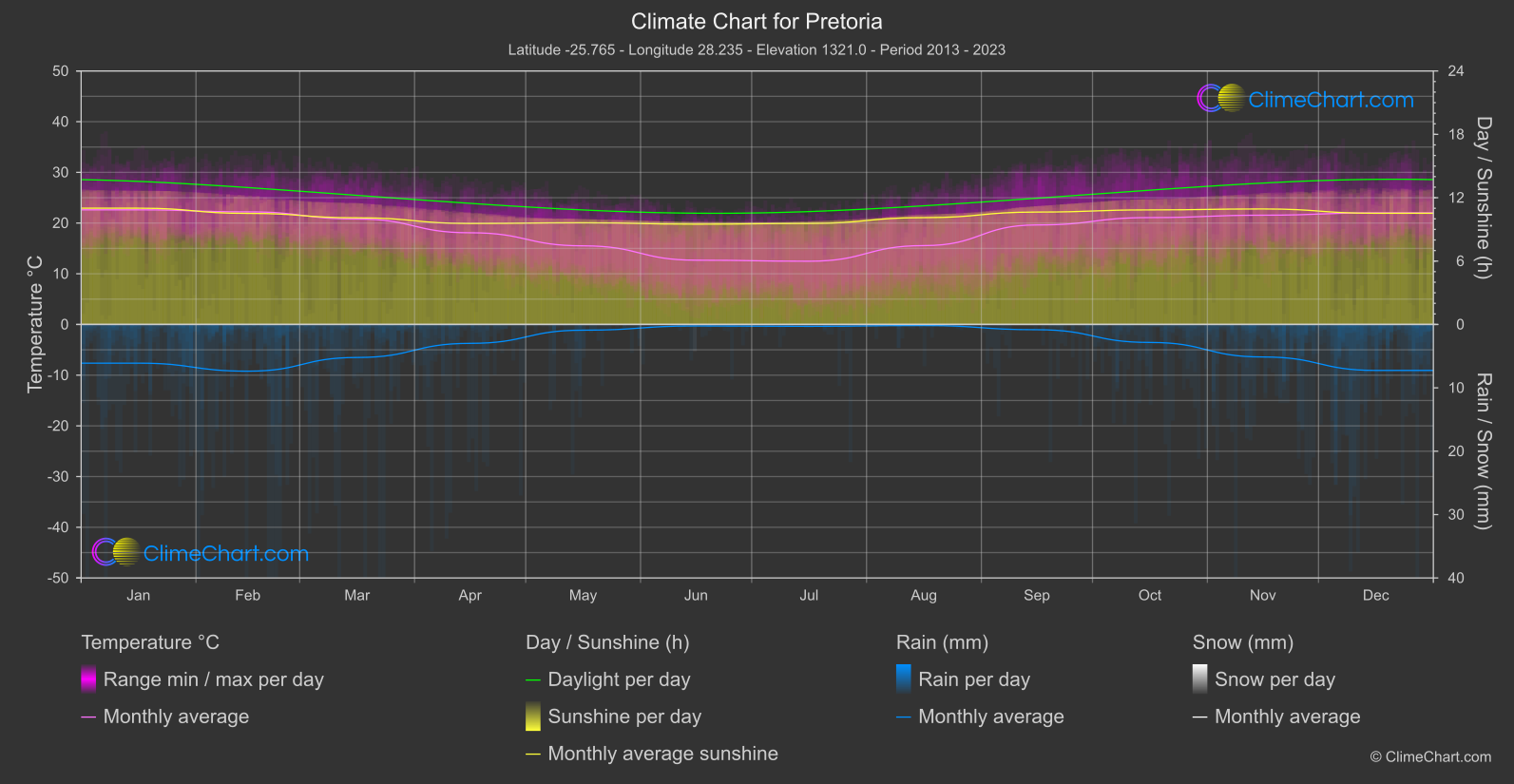
Pretoria
Region North-East
Monthly mean temperatures peak at January (22.
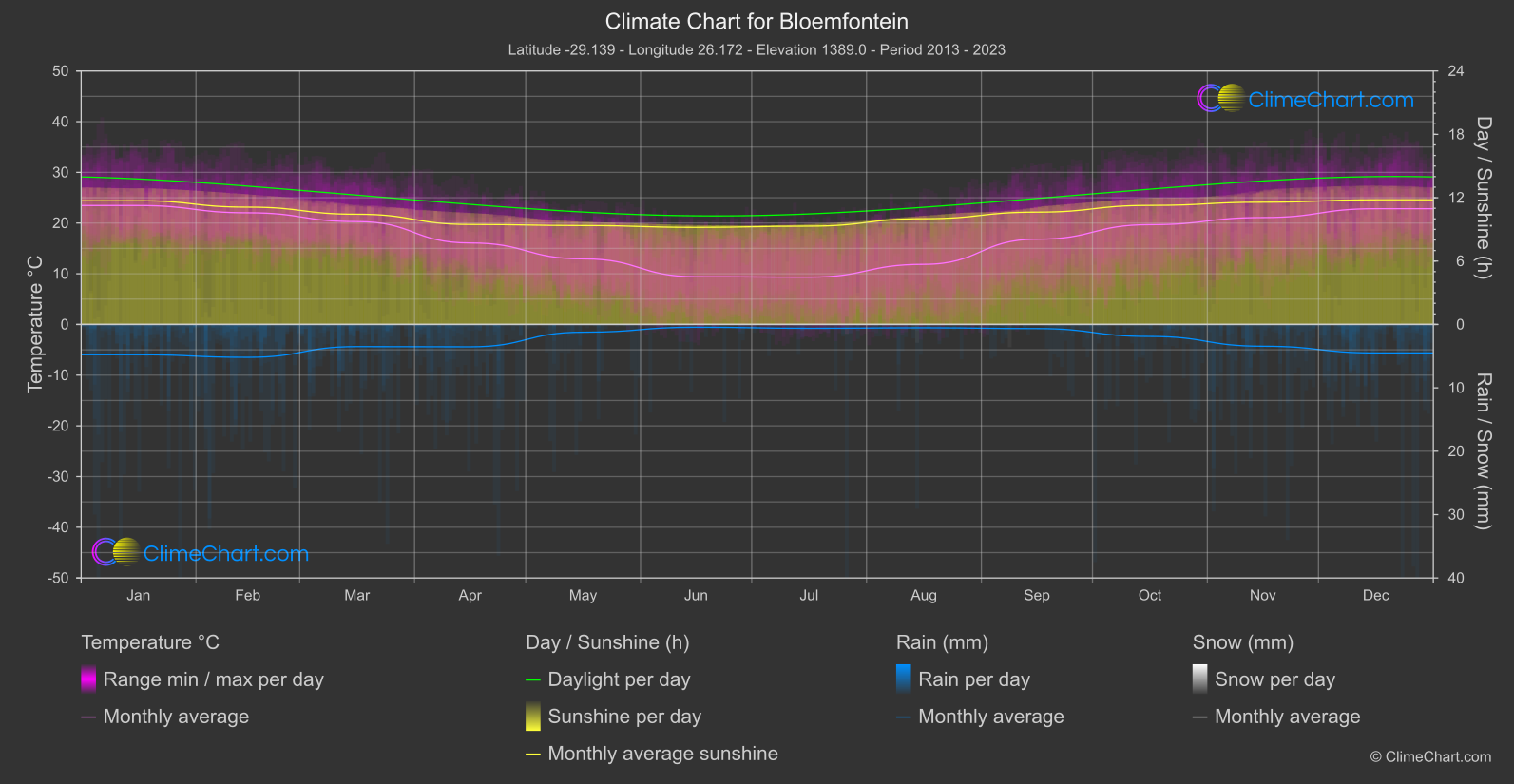
Bloemfontein
Region Central
Monthly mean temperatures are highest in January at 23.
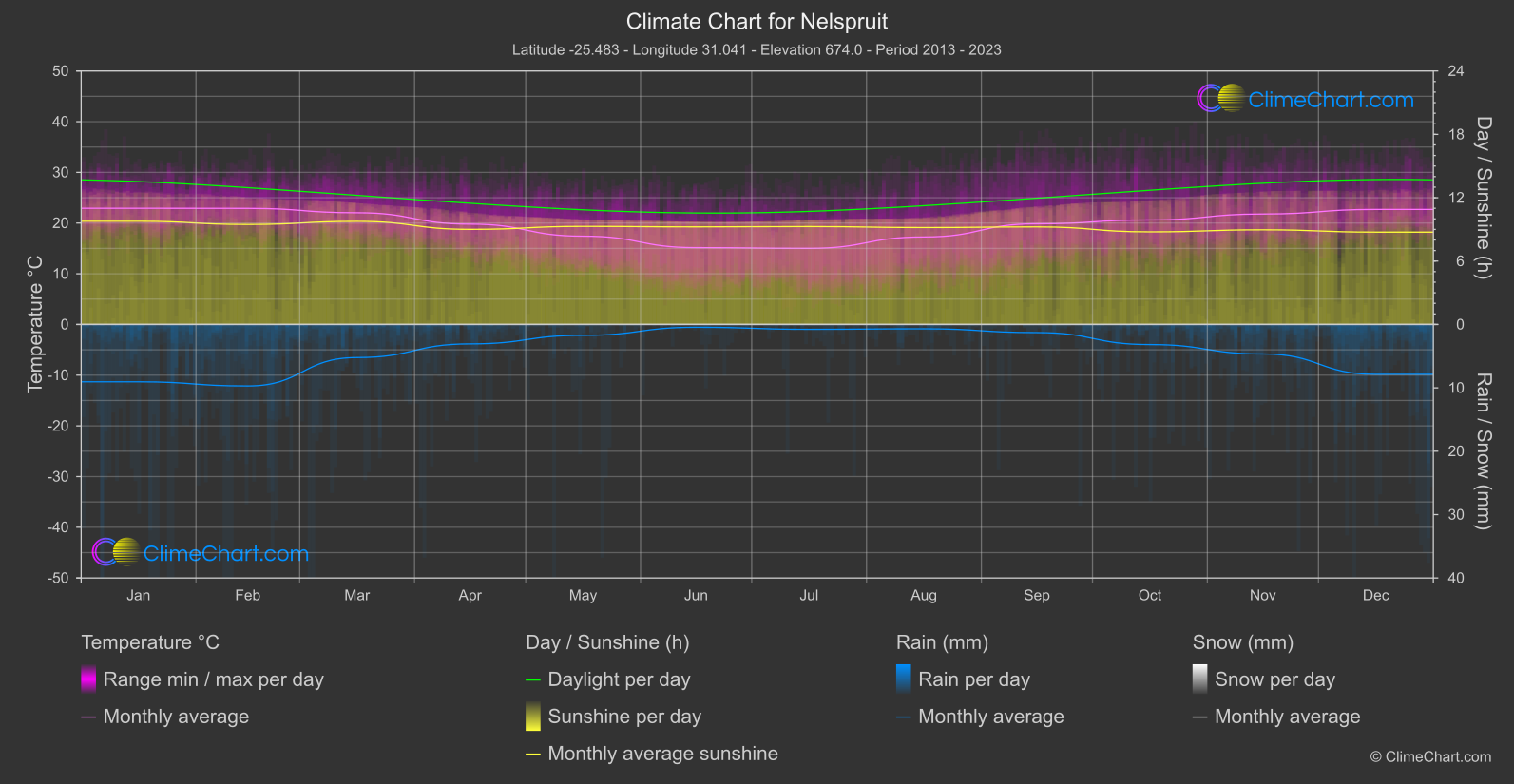
Nelspruit
Region North-East
The highest monthly mean temperature is shared by January / February, at 22.
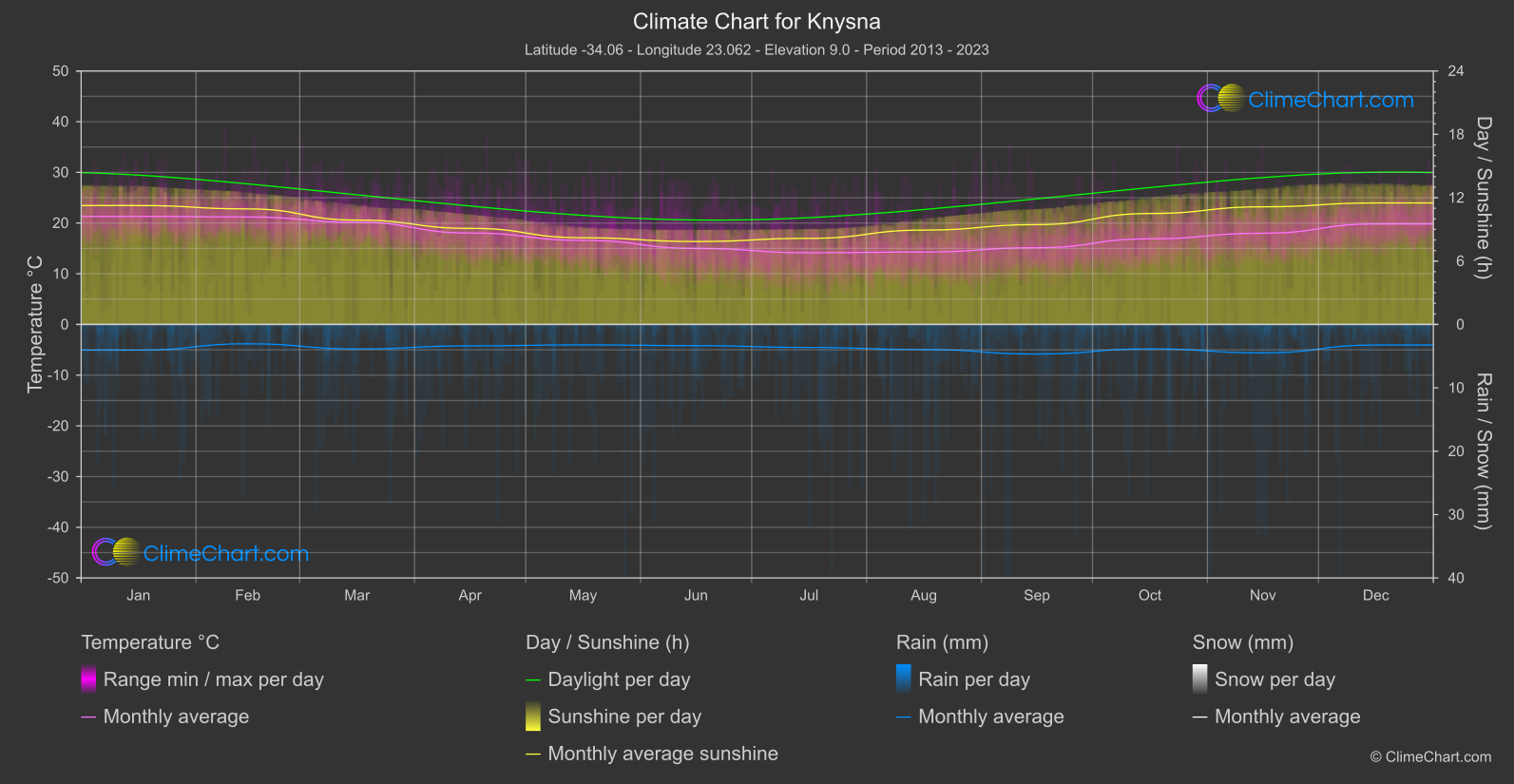
Knysna
Region South
The highest monthly mean temperature is 21.
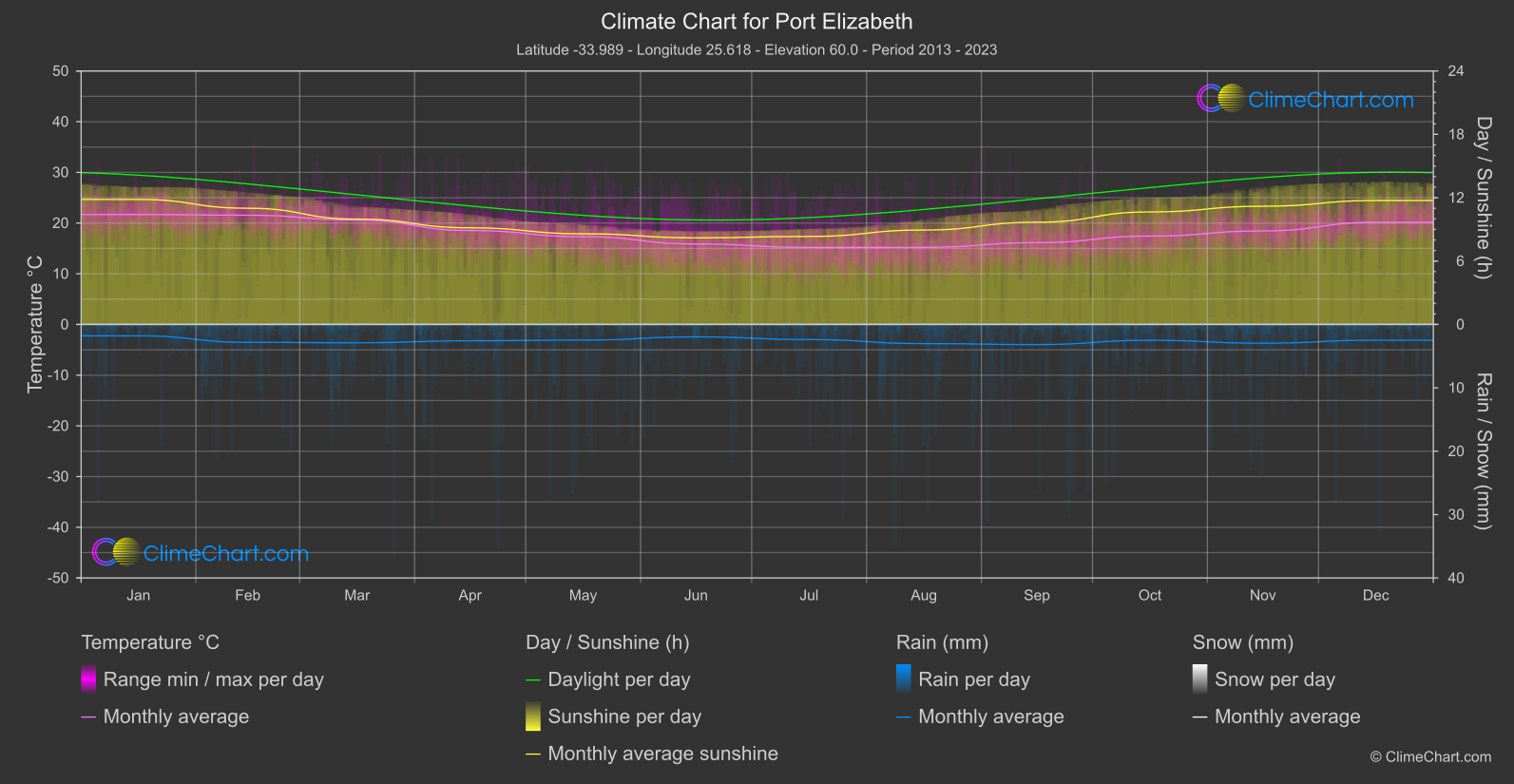
Port Elizabeth
Region South
The monthly mean temperature is highest in January, at 21.
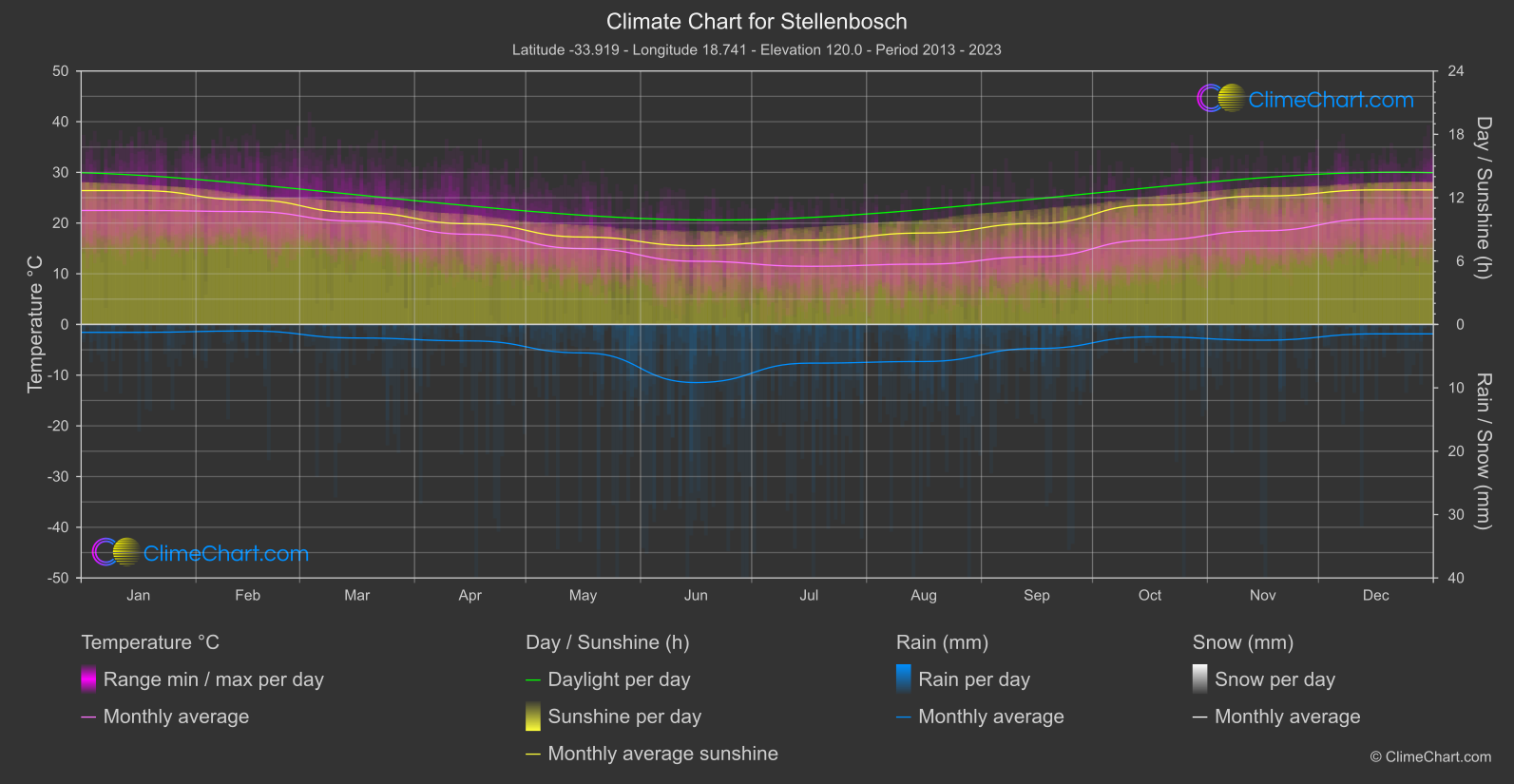
Stellenbosch
Region South-West
Monthly mean temperatures reach their high in January, at 22.
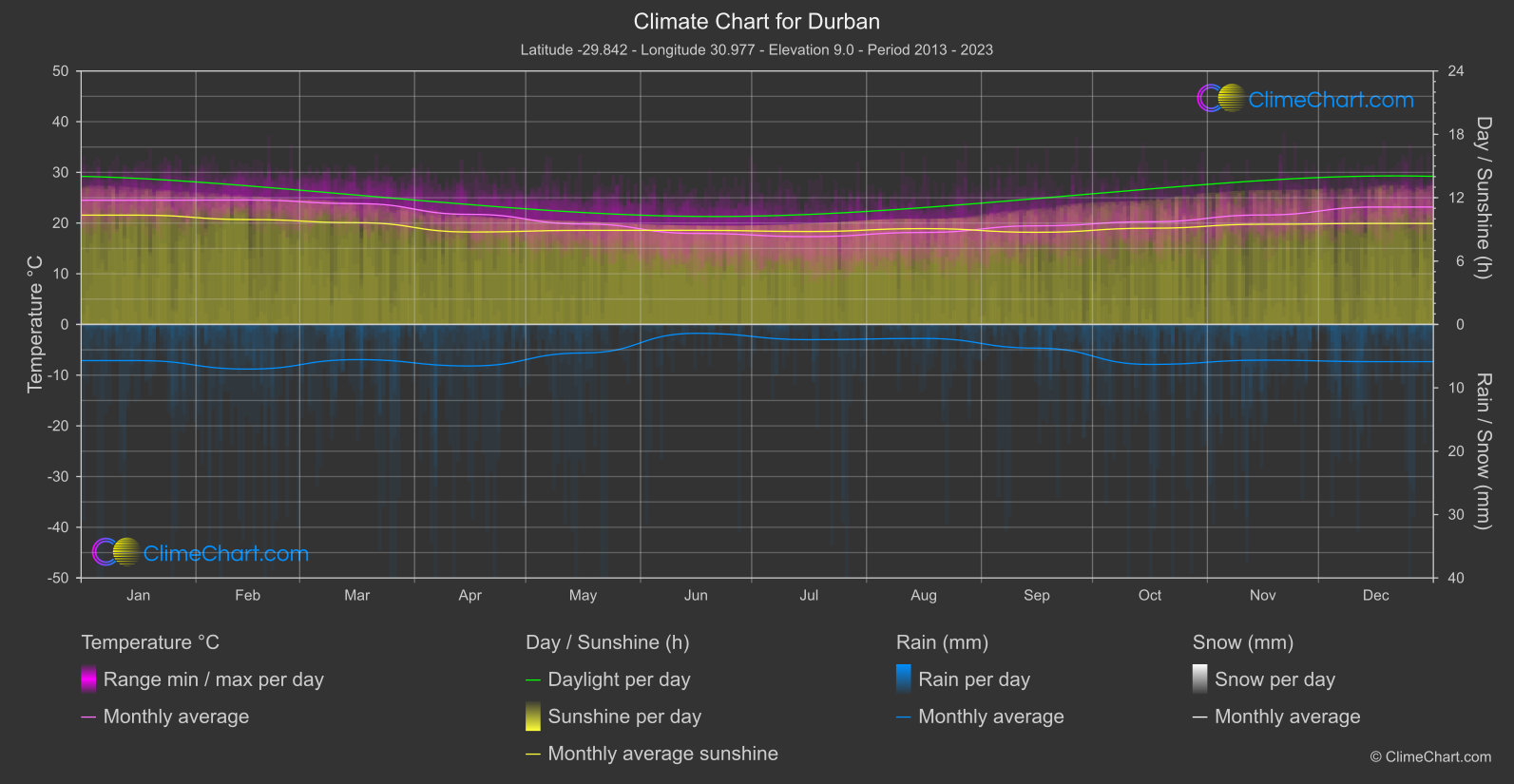
Durban
Region East
The warmest monthly mean is 24.
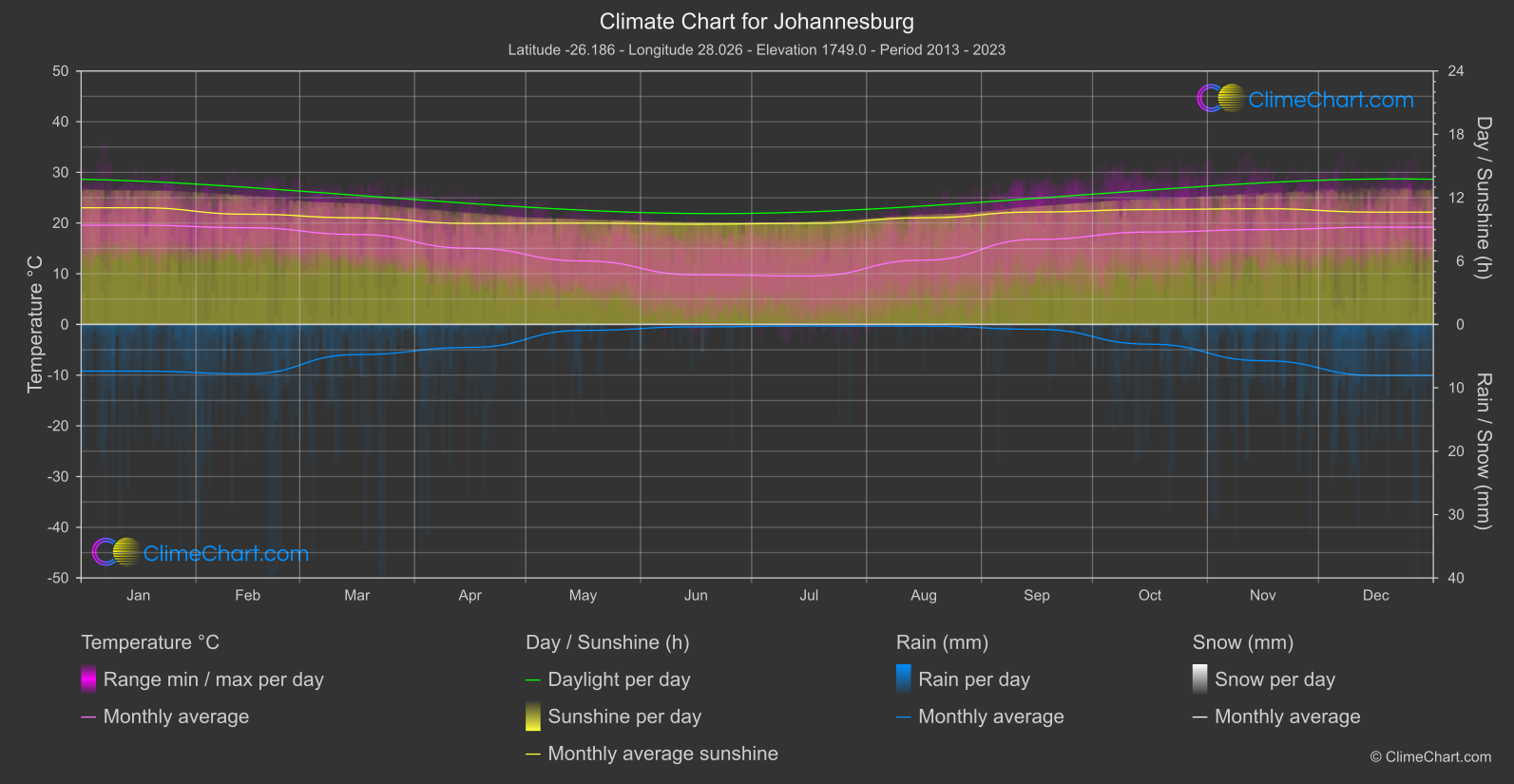
Johannesburg
Region North-East
The monthly mean temperature is highest in January, at 19.
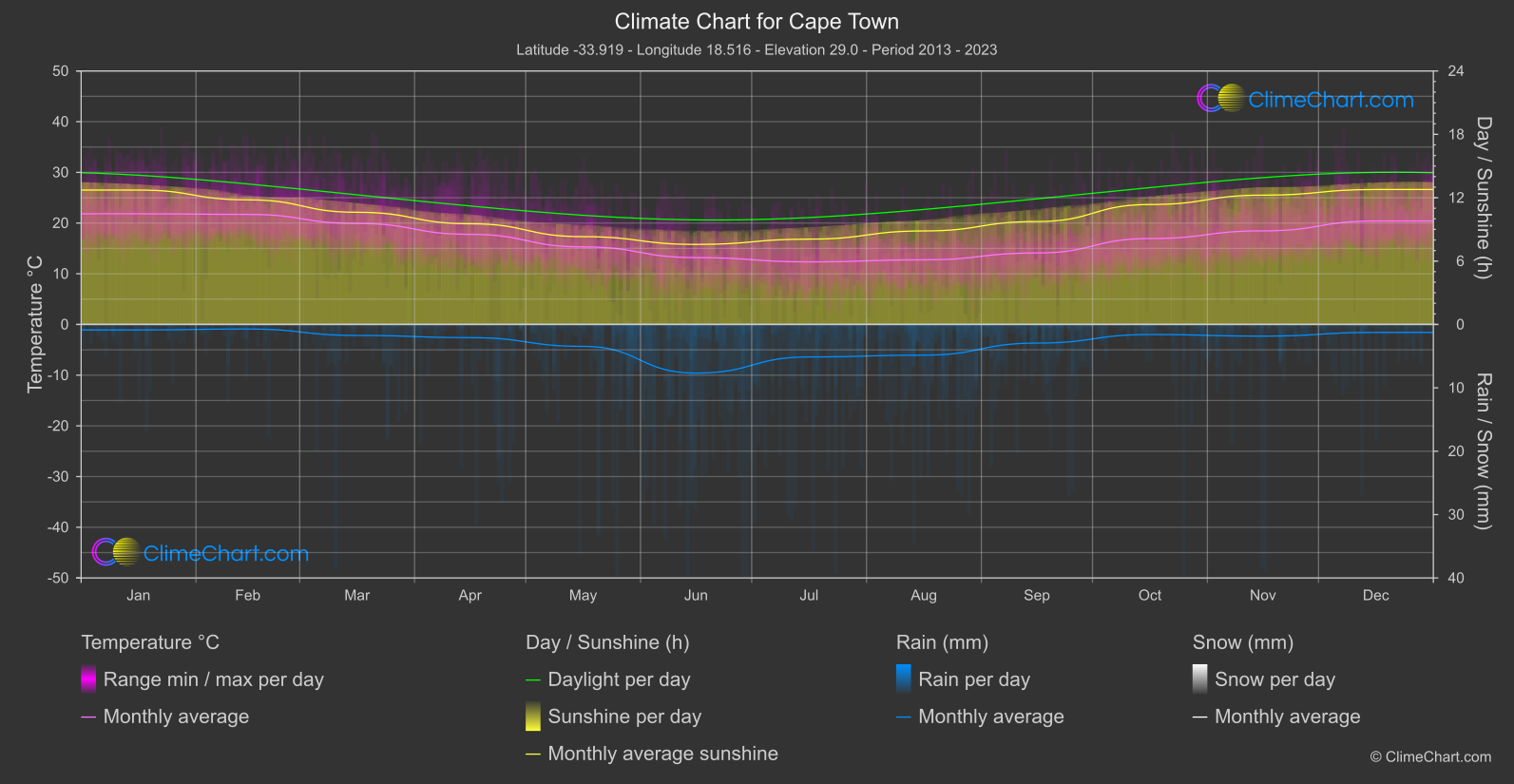
Cape Town
Region South-West
Monthly mean temperatures reach their highest point in January, at 21.