Detailed Climate Information for Argentina: Regional Weather Patterns and Data
Argentina, located in South America, is a country known for its diverse climate and landscapes.
Argentina experiences a wide range of climates due to its vast size and varying geography. The country features diverse climate zones, including subtropical in the north, temperate in the central regions, and subpolar in the far south. The Andes Mountains influence weather patterns, creating distinct microclimates across the country.
Best Travel Time Guide for Argentina: Ideal Seasons and Weather Insights
The best time to travel to Argentina depends on the region you plan to visit. For the northern areas with a subtropical climate, the ideal time is during the dry season from May to September. In central regions with a temperate climate, spring and fall are pleasant with fewer crowds. The southern regions with subpolar weather are best visited during the summer months from December to February.
Detailed Climate in the Regions of Argentina
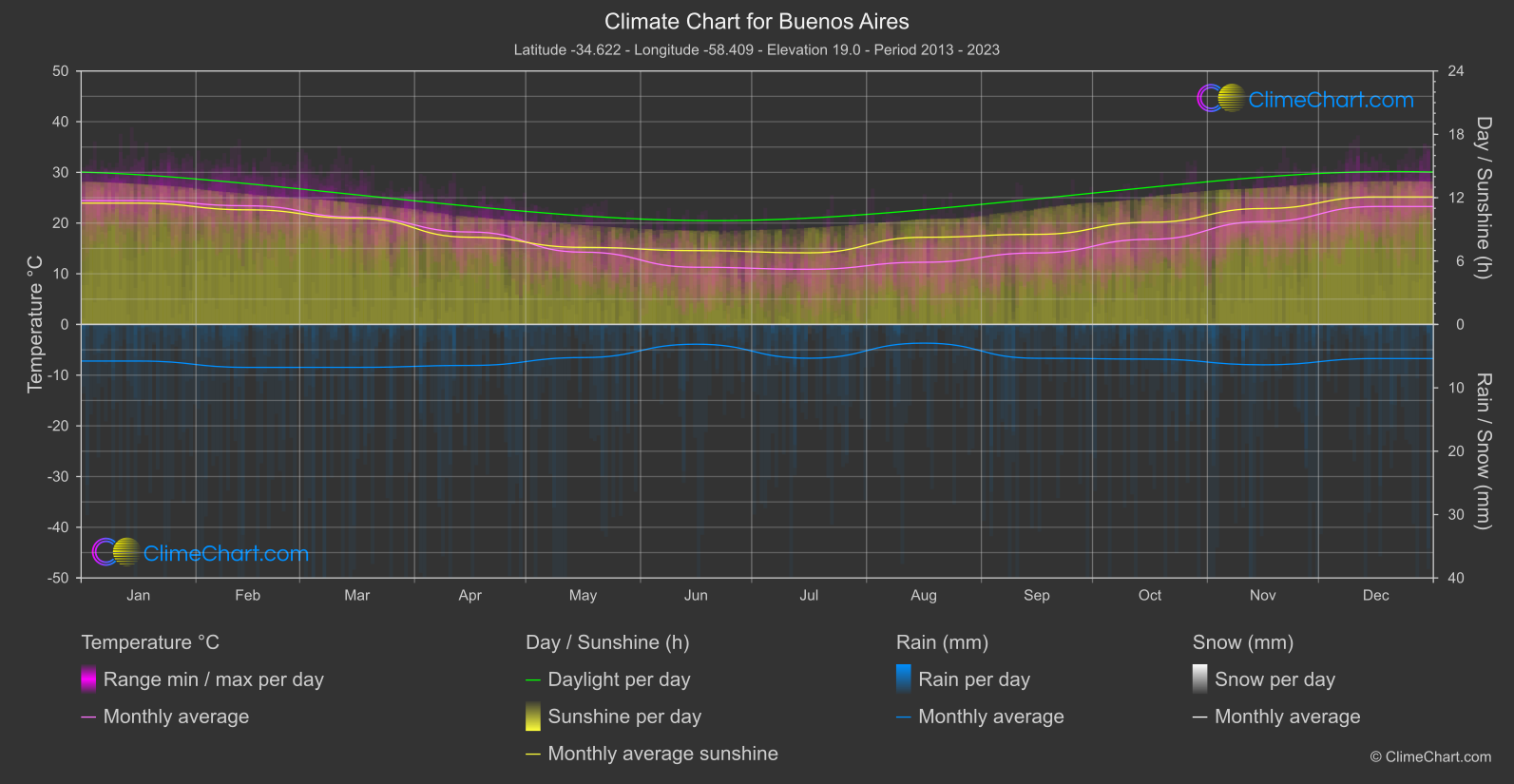
Buenos Aires
Region East
The highest monthly mean temperature occurs in January, at 24.
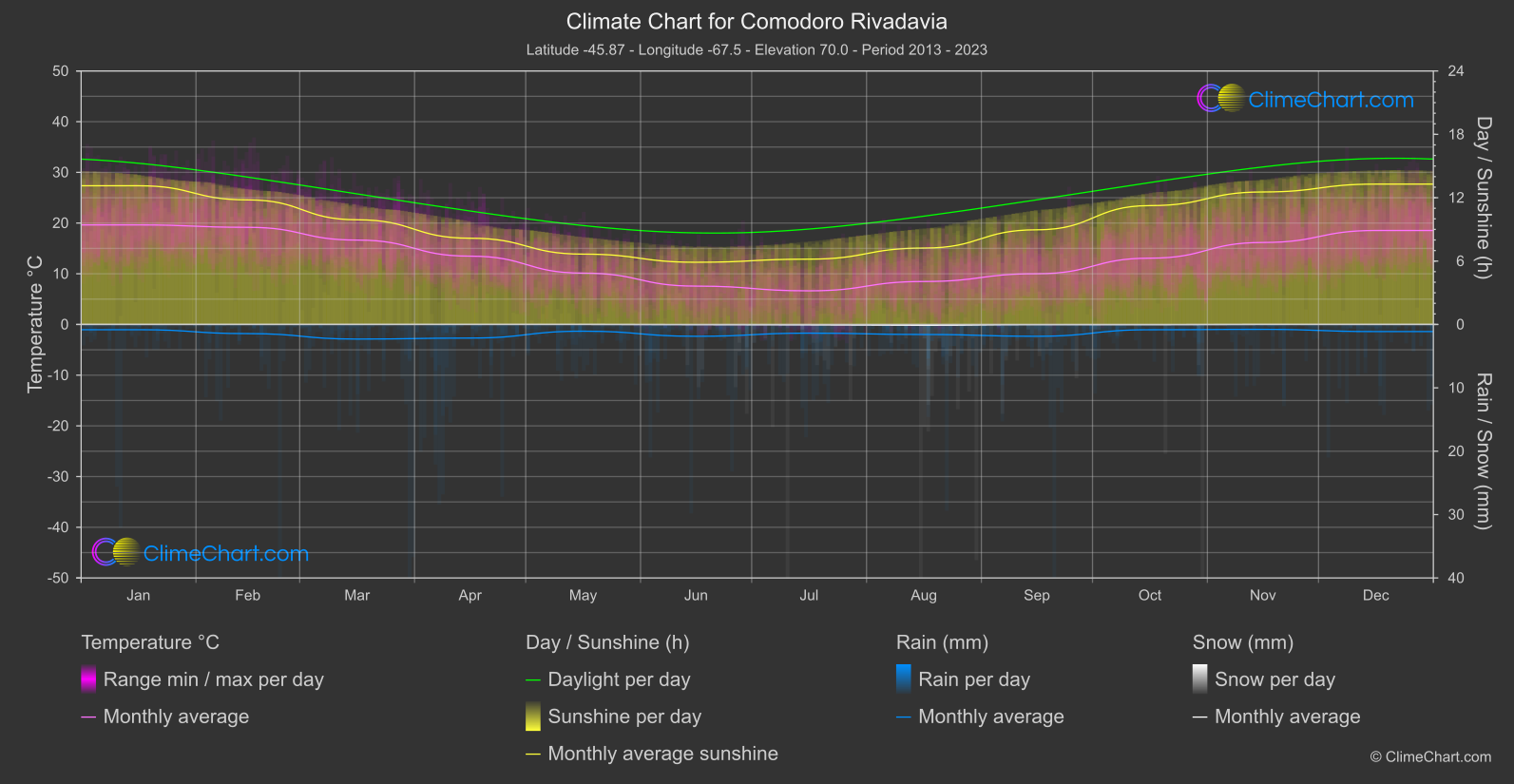
Comodoro Rivadavia
The monthly mean temperature is highest in January, at 19.
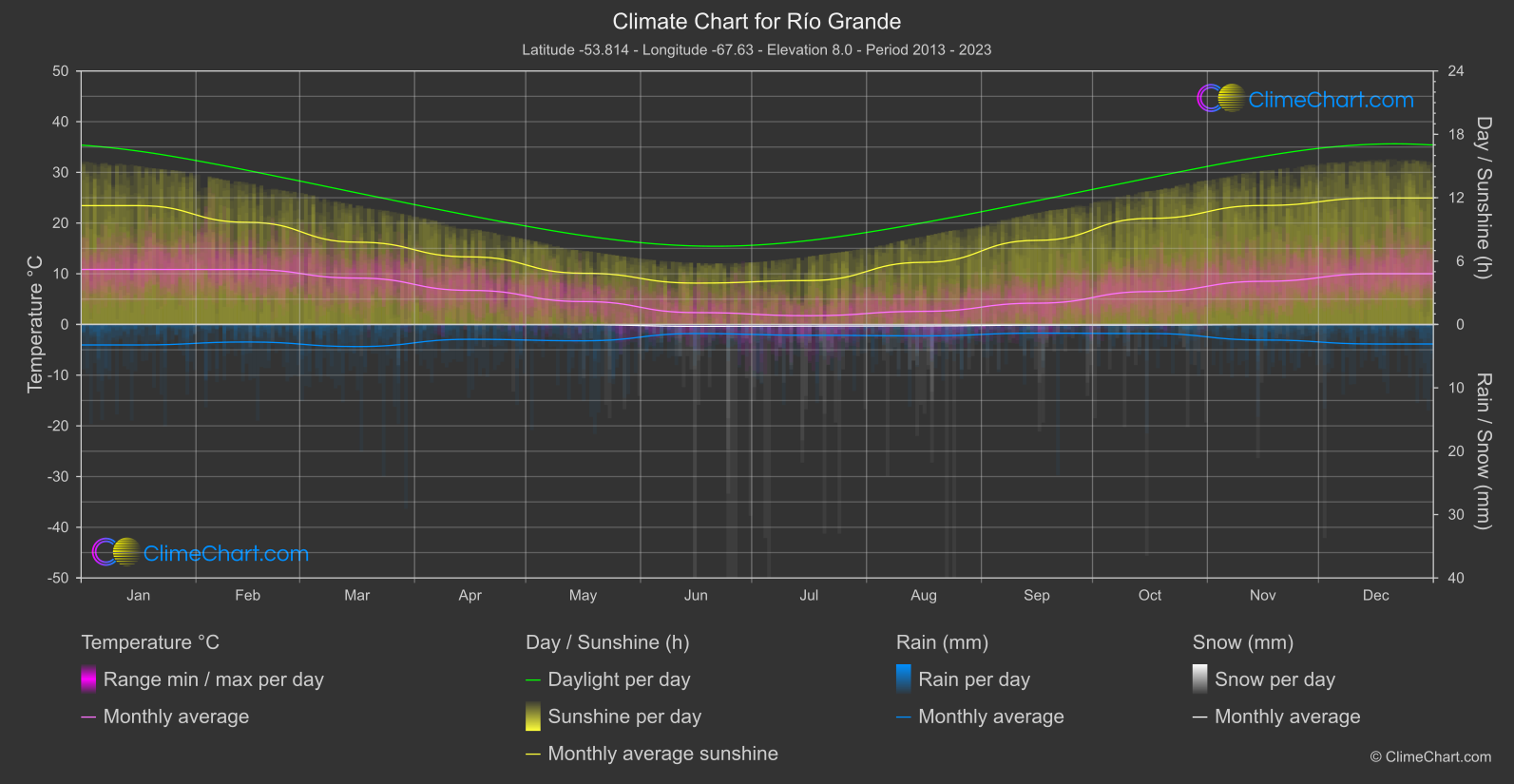
Río Grande
The coolest monthly mean temperature occurs in July at 1.
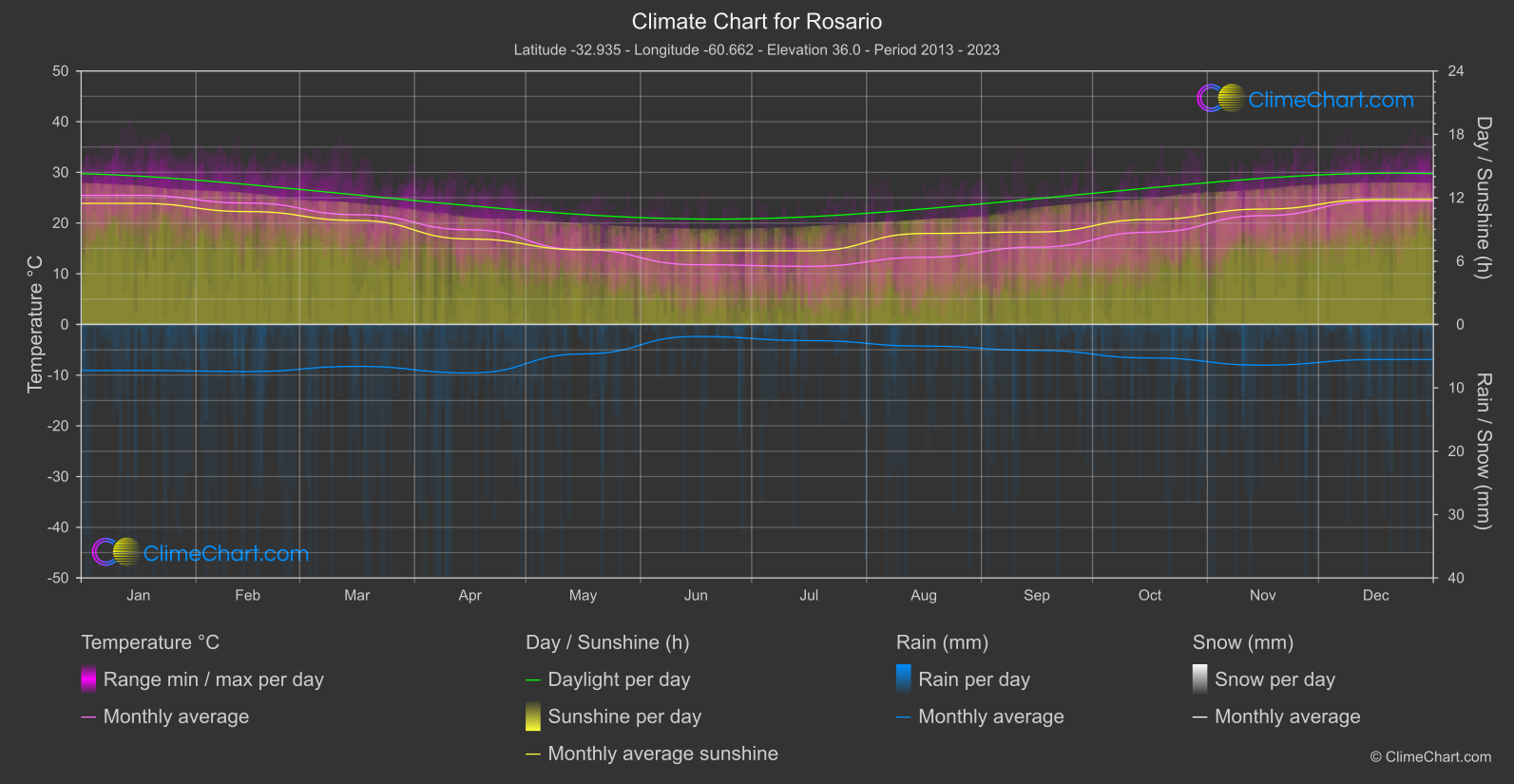
Rosario
Region Central
The warmest monthly mean is 25.
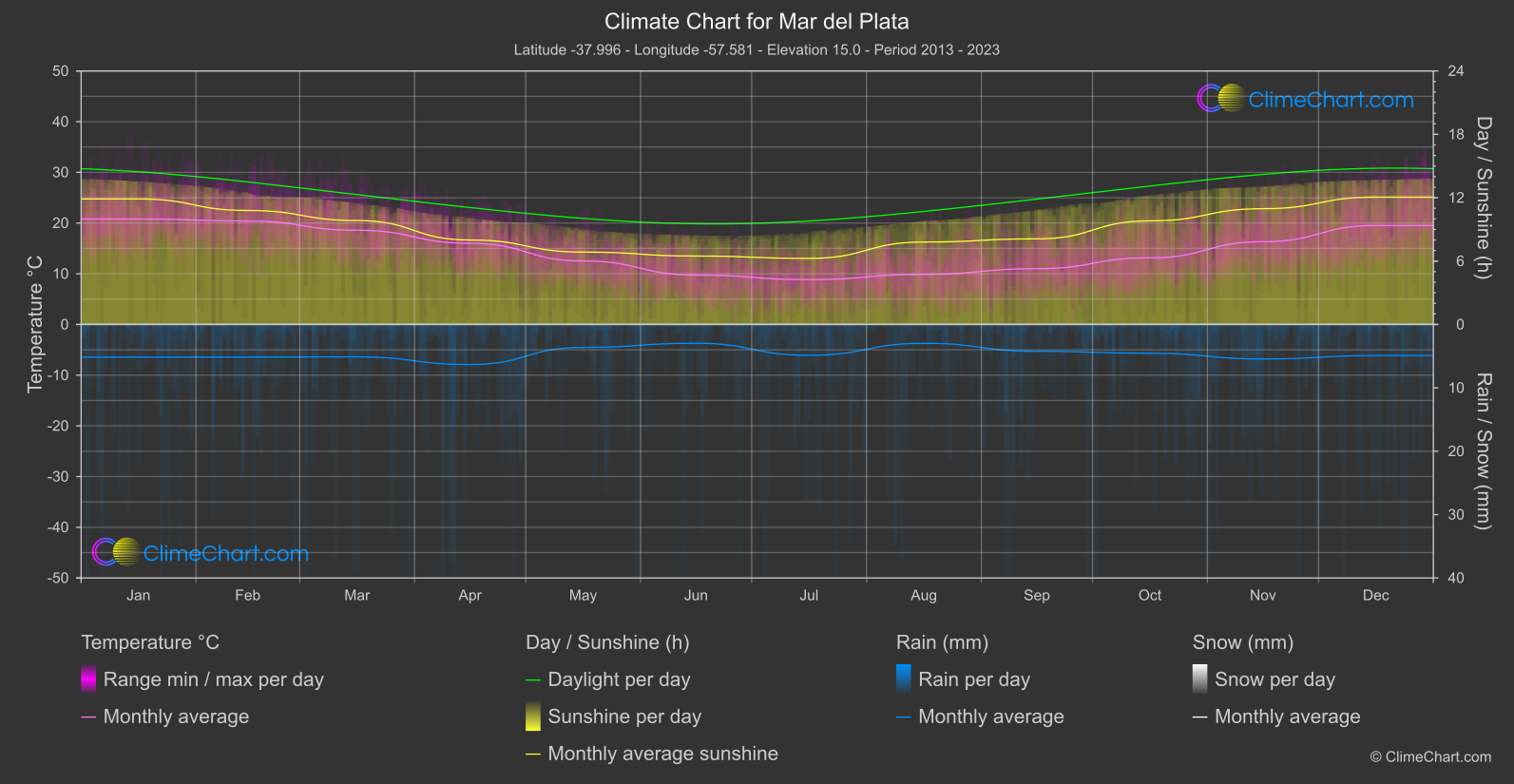
Mar del Plata
Region East
Monthly mean temperature is highest in January, at 20.
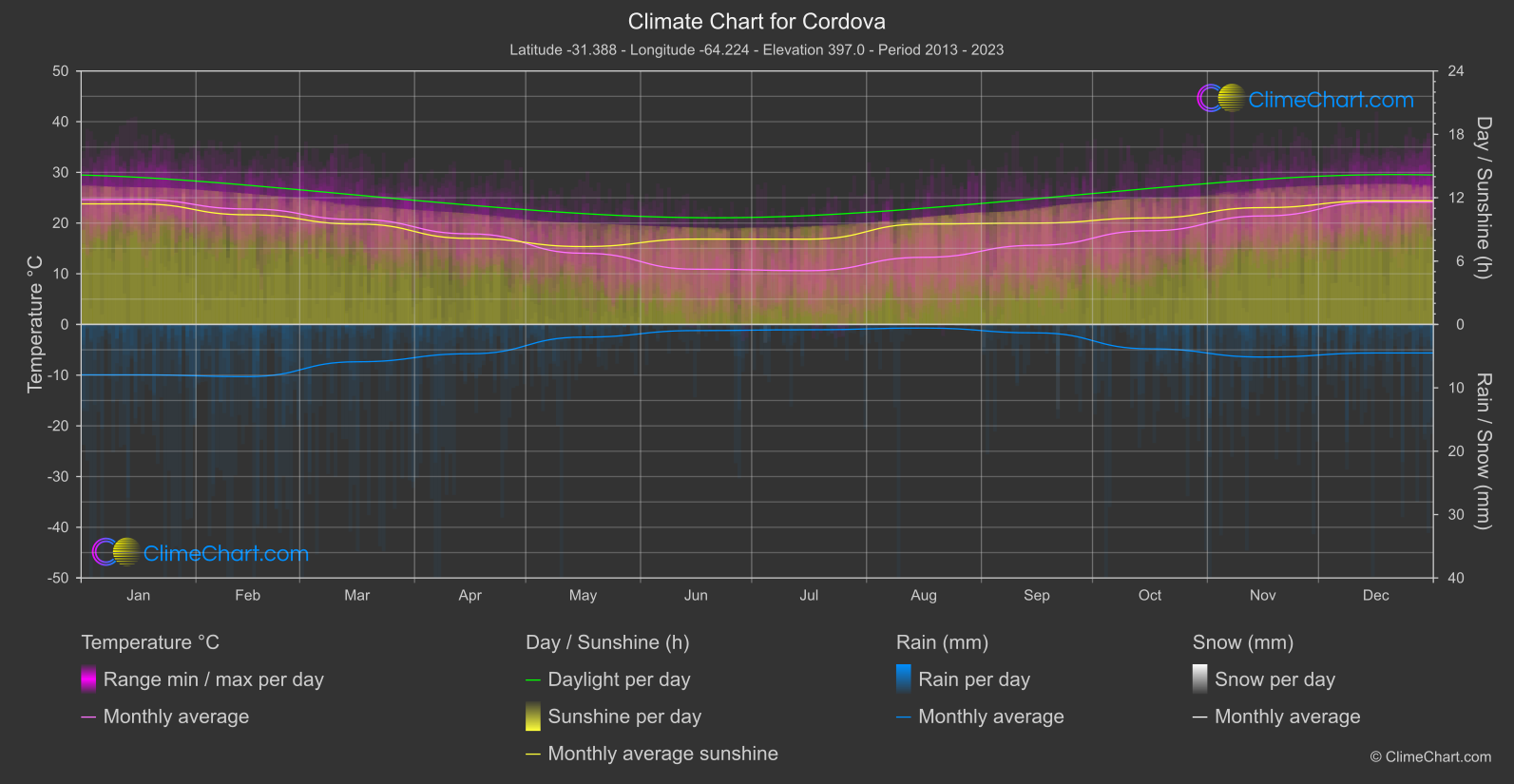
Cordova
Region North
The monthly mean temperature is highest in January, at 24.
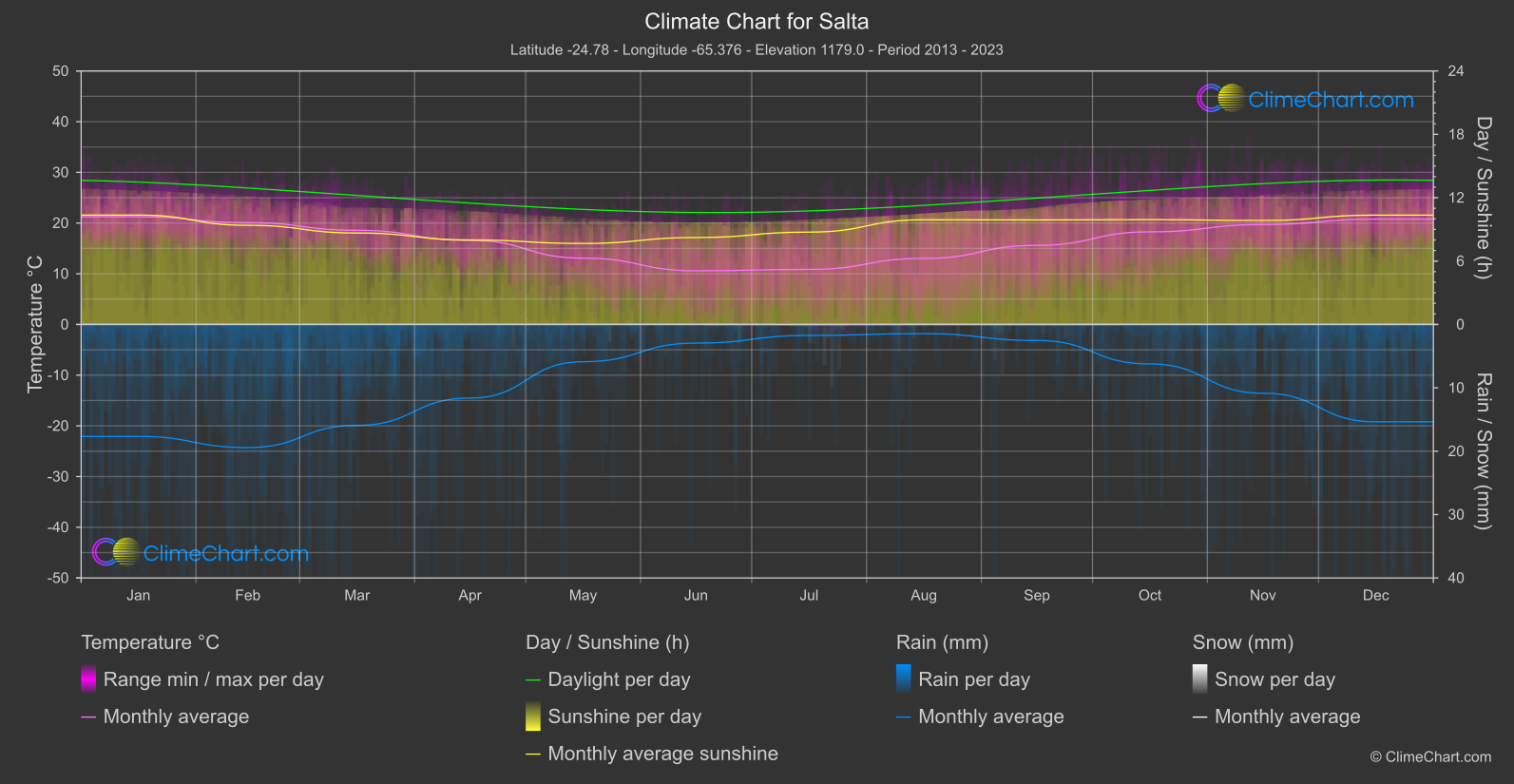
Salta
Region North
Salta, located in northwest Argentina, enjoys a pleasant climate with warm summers and mild winters.
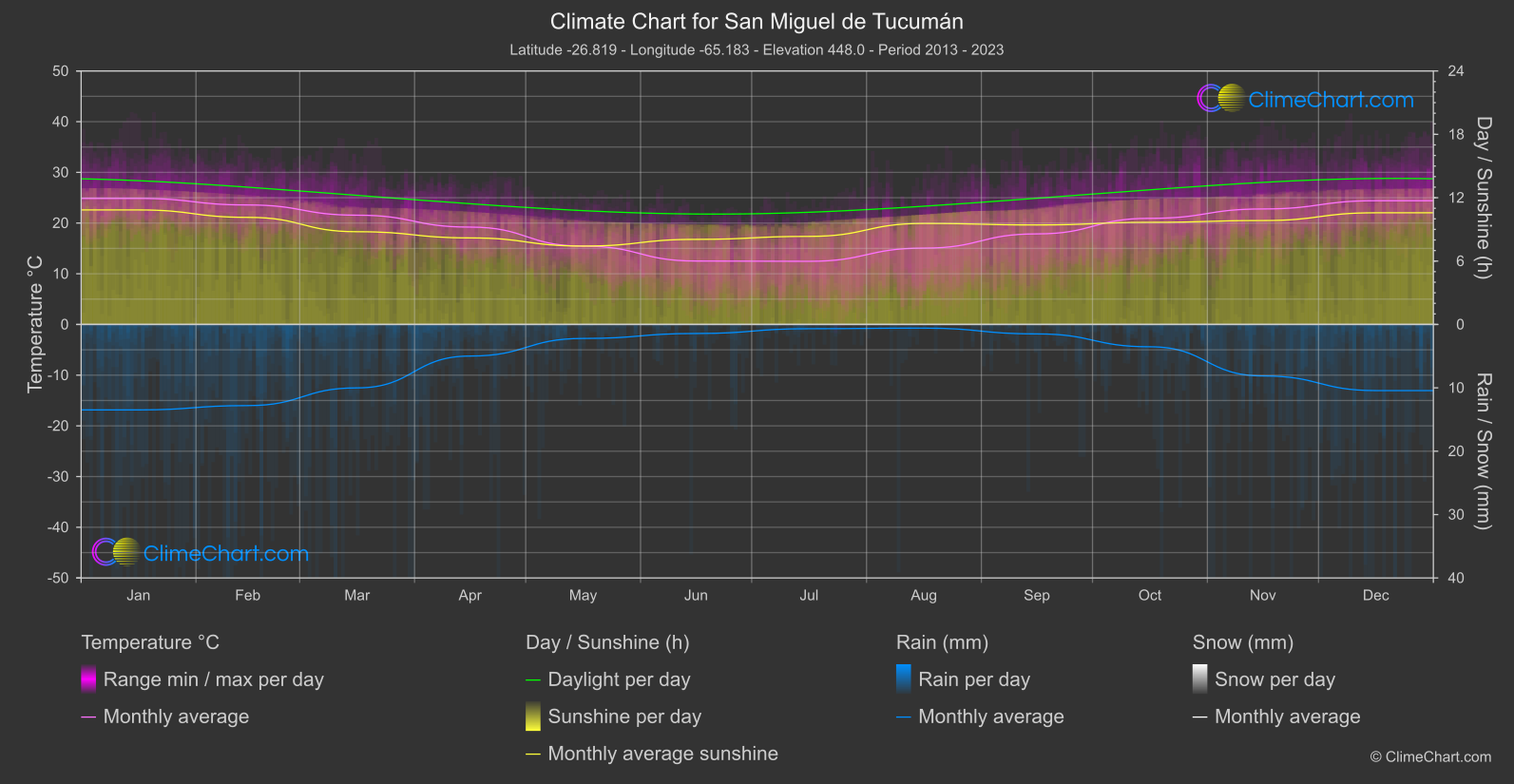
San Miguel de Tucumán
Region North
The warmest monthly mean temperature occurs in January, at 24.
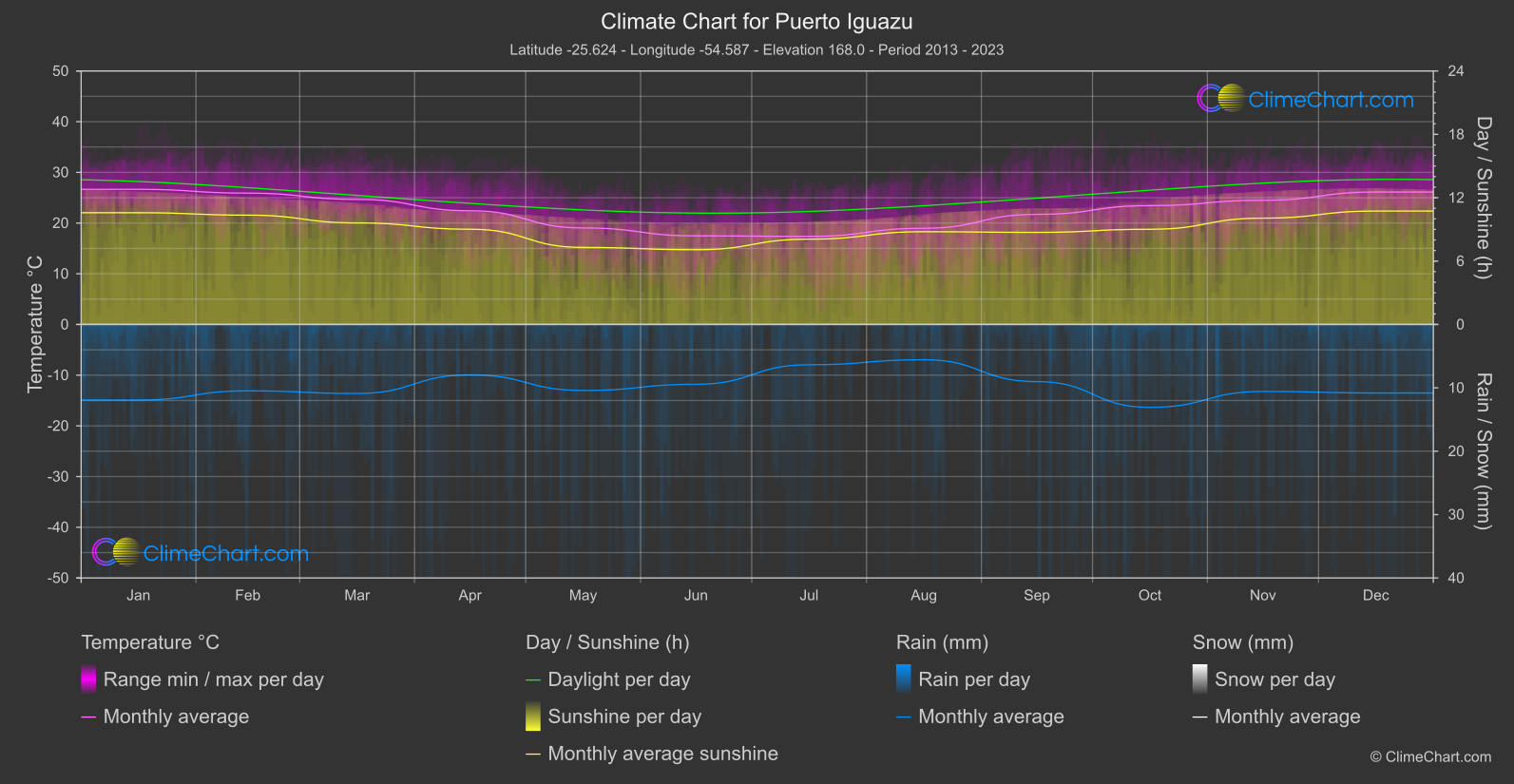
Puerto Iguazu
Region North-East
The warmest monthly mean temperature is 26.
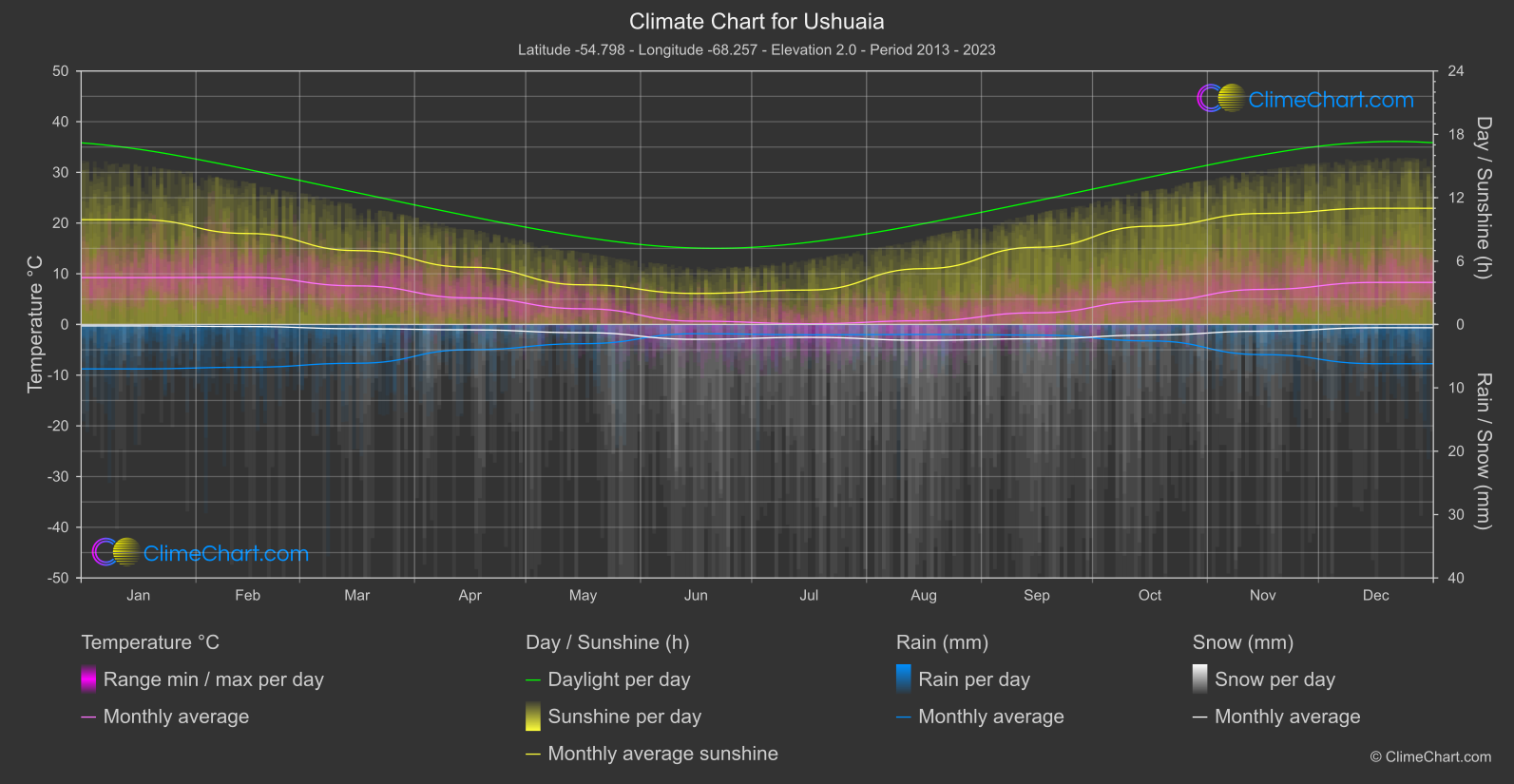
Ushuaia
Region South-West
The warmest monthly mean is 9.
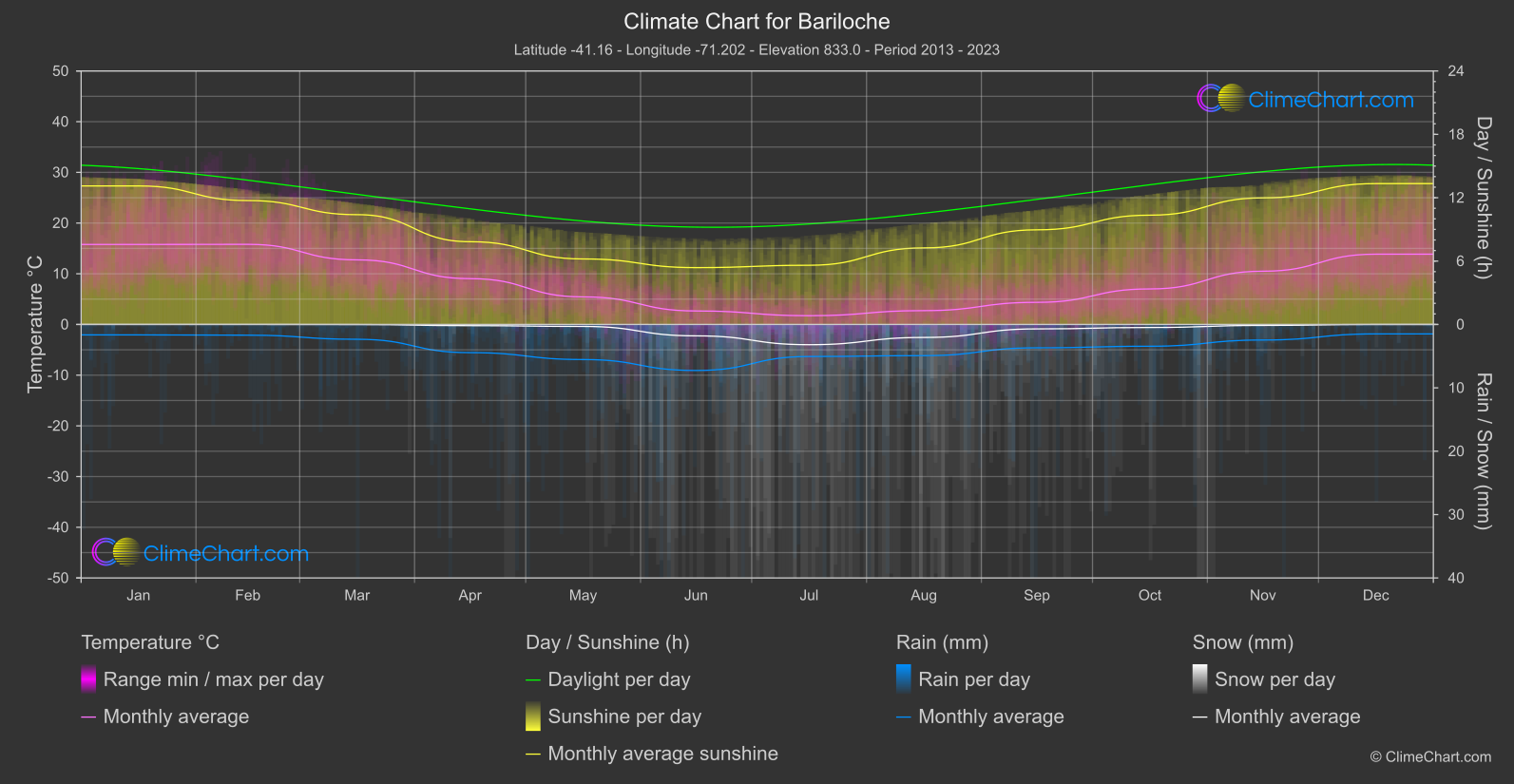
Bariloche
Region West
Monthly mean temperatures are warmest in January / February, when the mean is 15.
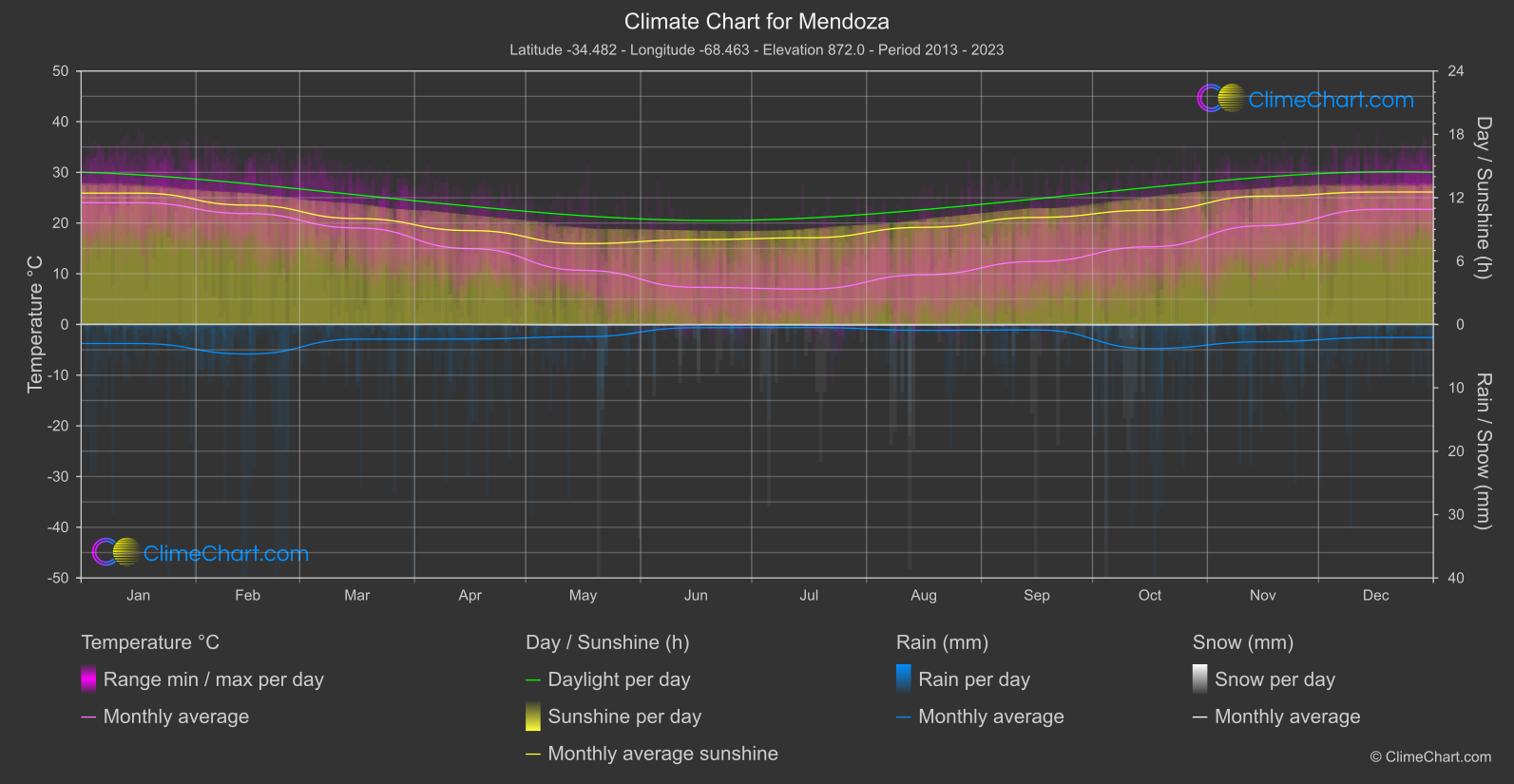
Mendoza
Region West
The coolest monthly mean temperature occurs in July at 7.