Climate Chart of Toronto, Canada
Monthly data: Temperature °C, Rain (mm), Sunshine (h) · 2013–2023
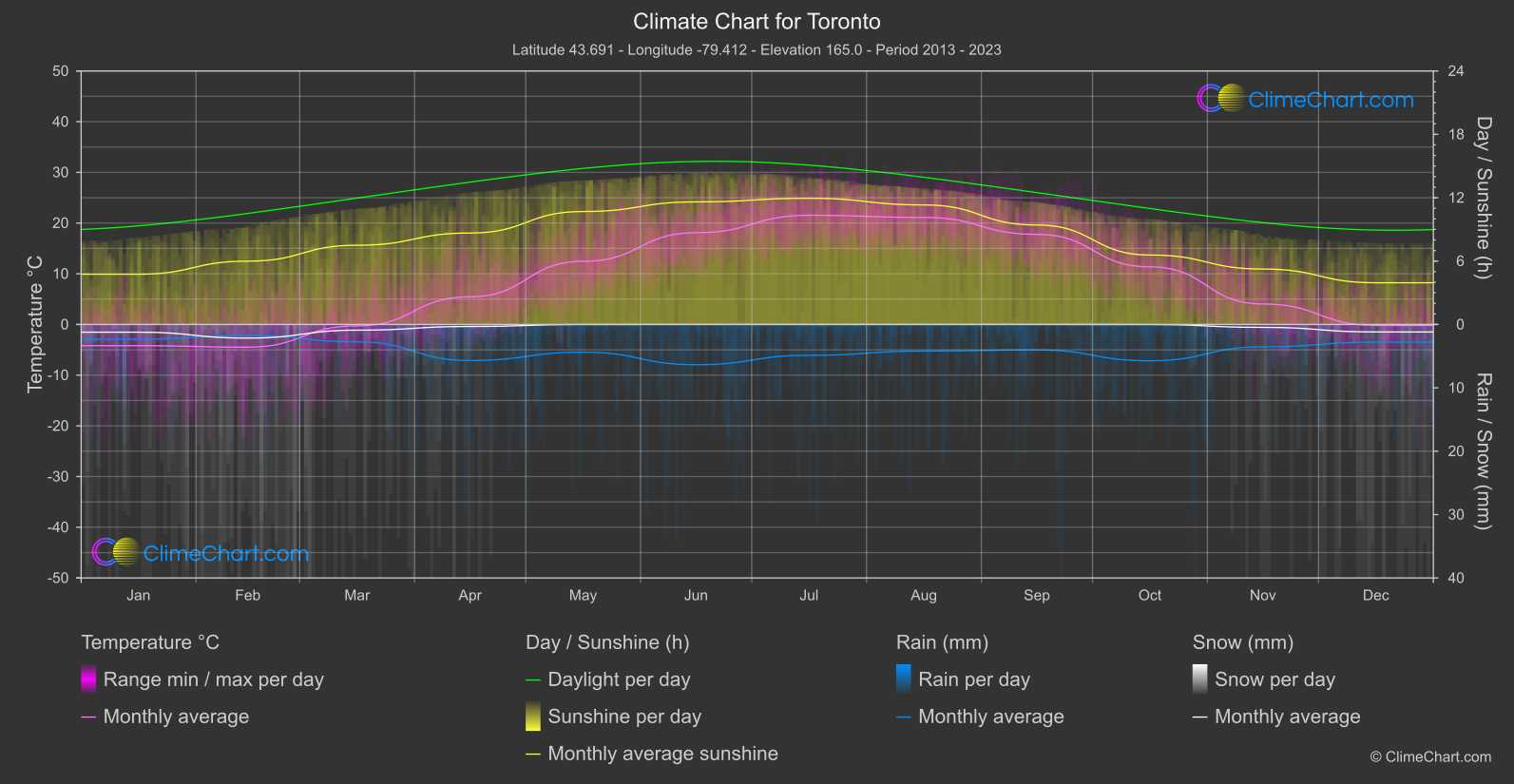
For Toronto, Canada, the climate data cover 2013–2023. Across the period, monthly mean temperatures range from -4.5 °C in February to 21.5 °C in July, while the unweighted mean of monthly means is 8.6 °C. Rainfall, sunshine and recorded snowfall also vary through the year, so these averages offer a broad guide to planning rather than a forecast for any particular day.
Climate overview
Temperature
The monthly mean temperature is lowest at -4.5 °C in February and reaches its highest point at 21.5 °C in July. These are averages for each month, not daytime highs or a description of the full range visitors may encounter within a day. The unweighted mean across the monthly means is 8.6 °C, a broad annual reference rather than a day-weighted average.
Rain
Mean daily rainfall is highest in June, at 3.17 mm/day, and lowest in February, at 0.87 mm/day. These are daily mean amounts, not monthly rainfall totals, and the lower average does not guarantee rain-free days or indicate how often rain occurs. Across calendar months, the unweighted mean of the monthly daily averages is 2.02 mm/day.
Snow
The highest monthly mean daily snowfall is 10.76 mm/day in February, and the unweighted mean across monthly snowfall averages is 2.60 mm/day. These snowfall amounts are daily means, not monthly totals; they do not show how many days have snow, how deep it becomes, whether snow cover persists, or whether conditions suit skiing.
Sunshine
Mean daily sunshine reaches its highest level in July, at 11.95 hours/day, and its lowest in December, at 3.95 hours/day. The unweighted mean of the monthly sunshine averages is 8.14 hours/day per day. These figures describe average sunshine duration, not day length or a guarantee of clear skies on a particular date.
Best Travel Time Guide for Toronto, Canada: Ideal Seasons and Weather Insights
If lower average rainfall is your priority, February is the conditional option in these data, with mean daily rainfall of 0.87 mm/day; it is not a promise of dry weather, so keep flexible rain protection in mind. For visitors planning around cooler monthly averages, February has the lowest monthly mean temperature, -4.5 °C. Neither measure describes every day's conditions. Rain preparation is particularly relevant for June, when mean daily rainfall reaches 3.17 mm/day. Sunshine averages can also help with outdoor planning: July has the highest mean daily duration at 11.95 hours/day, while December has the lowest at 3.95 hours/day. Sunshine duration is not day length, and these averages cannot guarantee the conditions for sightseeing on a chosen date. For winter travel, the highest monthly mean daily snowfall occurs in February at 10.76 mm/day. This average alone cannot establish how often snow falls, whether it remains on the ground, or what conditions will be like during a visit; check date-specific forecasts when making plans.
Climate Data Overview for Toronto, Canada
Explore the comprehensive climate data for Toronto, Canada. This detailed table provides valuable insights into temperature variations, precipitation levels, and seasonal changes, helping you understand the unique weather patterns of this region.
| Month | Average: Temperature °C | Rain (mm) / day | Snow (mm) / day | Sunshine (h) / day |
|---|---|---|---|---|
| Jan | -4.2 | 1.17 | 6.08 | 4.76 |
| Feb | -4.5 | 0.87 | 10.76 | 5.99 |
| Mar | -0.3 | 1.37 | 4.50 | 7.50 |
| Apr | 5.5 | 2.84 | 1.58 | 8.66 |
| May | 12.5 | 2.19 | 0.03 | 10.69 |
| Jun | 18.1 | 3.17 | 0.00 | 11.60 |
| Jul | 21.5 | 2.43 | 0.00 | 11.95 |
| Aug | 21.1 | 2.10 | 0.00 | 11.32 |
| Sep | 17.8 | 2.01 | 0.00 | 9.41 |
| Oct | 11.4 | 2.87 | 0.05 | 6.58 |
| Nov | 4.0 | 1.77 | 2.29 | 5.25 |
| Dec | -0.2 | 1.39 | 5.91 | 3.95 |
| Average | 8.6 | 2.02 | 2.60 | 8.14 |